 Money

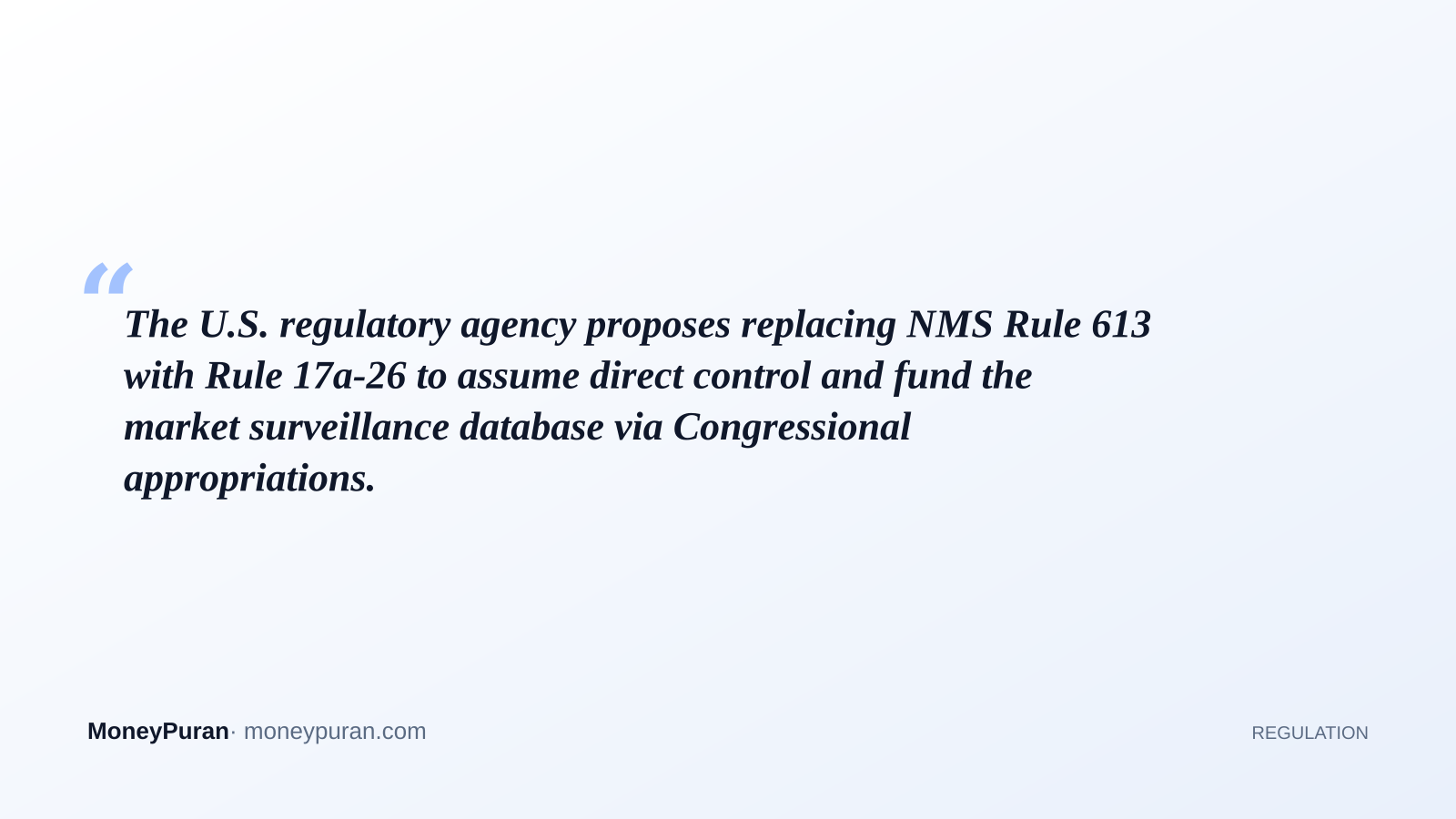
The U.S. regulatory agency proposes replacing NMS Rule 613 with Rule 17a-26 to assume direct control and fund the market surveillance database via Congressional appropriations.
Key points
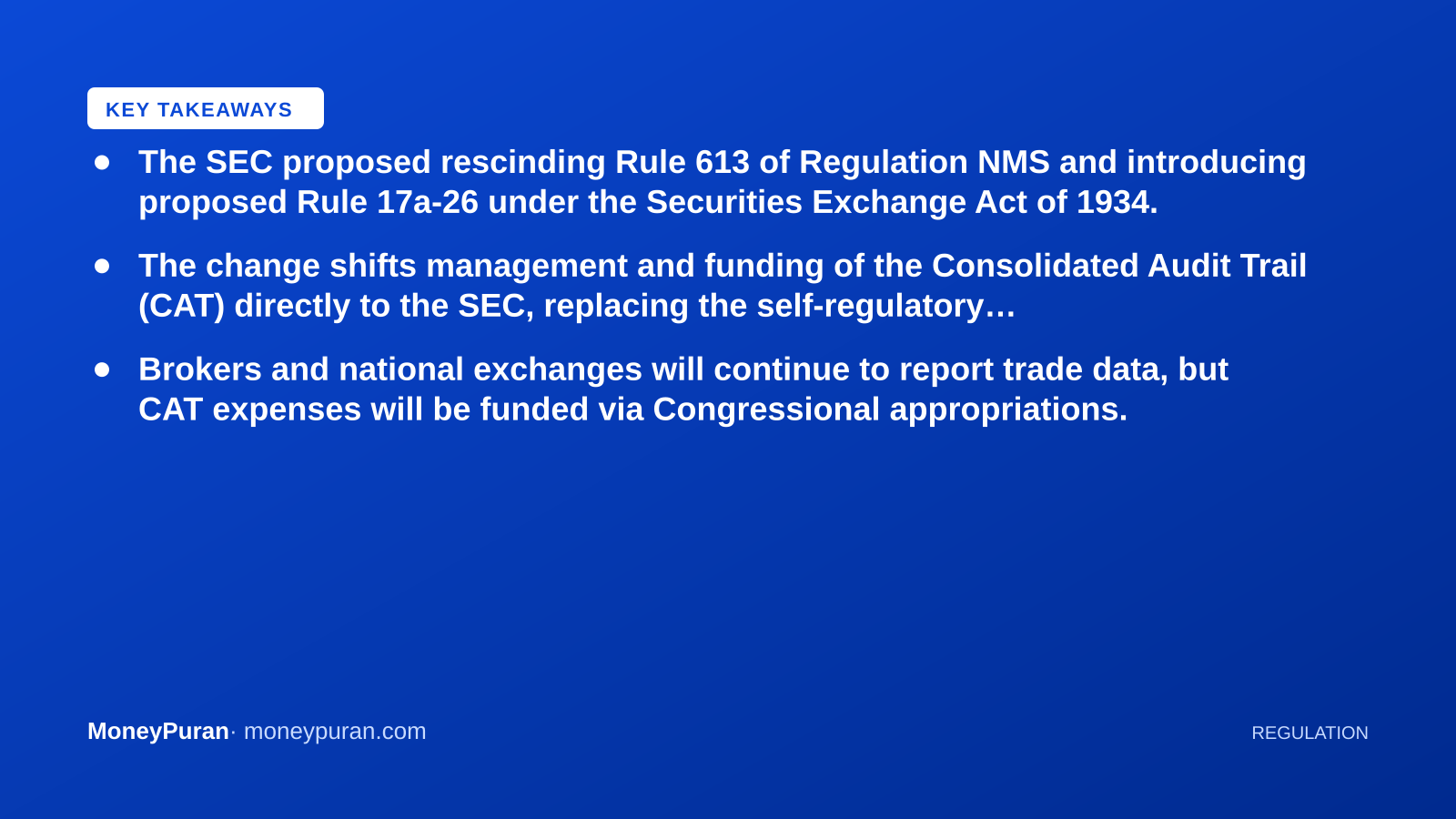
- The SEC proposed rescinding Rule 613 of Regulation NMS and introducing proposed Rule 17a-26 under the Securities Exchange Act of 1934.
- The change shifts management and funding of the Consolidated Audit Trail (CAT) directly to the SEC, replacing the self-regulatory organization (SRO) management model.
- Brokers and national exchanges will continue to report trade data, but CAT expenses will be funded via Congressional appropriations.
- The move follows previous actions by SEC Chairman Paul S. Atkins that cut CAT’s annual projected costs by over $100 million and permanently removed personal data collection.
- A 60-day public comment period will open following publication in the Federal Register.
The U.S. Securities and Exchange Commission has formally proposed a structural overhaul of the Consolidated Audit Trail, taking direct administrative and financial control over the central database used to track equity and options trading across American stock markets. The SEC CAT proposal seeks to resolve long-running market disputes over funding models, governance, and operating costs that have dogged the surveillance infrastructure since its inception.
Under the regulatory package announced by the agency, the SEC intends to rescind Rule 613 of Regulation NMS, which required national securities exchanges and national securities associations to construct, manage, and finance the database through a national market system plan. In its place, the regulator is proposing Rule 17a-26 under the Securities Exchange Act of 1934. This new rule will require self-regulatory organizations and registered broker-dealers to report substantially the same trade data directly to the SEC or an agency-designated entity.
Replacing Regulation NMS Rule 613 with Direct Oversight
The proposed transition away from Rule 613 marks a fundamental shift in how U.S. market surveillance data is collected and maintained. Rather than relying on a decentralized governance board formed by self-regulatory organizations, the SEC will assume direct operational leadership. To cover the ongoing costs of running the surveillance system, the agency plans to utilize funds appropriated by the U.S. Congress rather than relying on complex fee-allocation formulas previously imposed on exchanges and market participants.
Despite the administrative shift, the reporting burden on brokerage firms and exchanges will remain largely identical in scope. Entities will still be required to record and electronically submit granular trade and order information. However, reporting will flow into an infrastructure controlled directly by federal regulators, which the SEC expects will create clearer lines of accountability and streamline oversight operations.
Addressing Cost Overruns and Data Privacy Concerns
The proposal builds upon broader reform measures initiated under SEC Chairman Paul S. Atkins. Prior administrative orders and exemptive relief issued by the Commission have already reduced the Consolidated Audit Trail’s projected annual operating costs by more than $100 million. Additionally, regulators permanently eliminated the collection of personally identifiable information from the database, addressing persistent industry concerns regarding investor data privacy and potential cyber exposure.
A concept release published earlier in the year generated public feedback from both retail and institutional market participants who supported stronger regulatory control over the system. Commission officials noted that past governance models led to recurring friction between exchanges, broker-dealers, and regulatory bodies over cost allocation and operational efficiency. By bringing the database under direct agency control, officials aim to establish a disciplined operational structure while preserving core market surveillance capabilities.
What this means for investors
For everyday investors and international funds trading U.S. financial markets, the proposed restructuring offers greater clarity around data security and regulatory expenses. The complete removal of personally identifiable information from the audit database reassures individual market participants that personal identifying details are not stored in a centralized trade repository. Furthermore, shifting funding responsibilities to Congressional appropriations eliminates unpredictable regulatory fees previously passed down through market intermediaries, potentially reducing operational friction for retail and institutional brokers alike.
Indian institutional investors, asset management funds, and retail traders accessing U.S. equities through cross-border trading accounts will see no disruption in order execution or settlement processes. Because the reporting requirements for broker-dealers remain functionally equivalent, execution quality and market transparency across U.S. exchanges will be preserved. Investors should expect cleaner governance and reduced administrative litigation between exchanges and federal regulators, creating a more predictable regulatory background for U.S. market operations.
Frequently asked questions
What is the Consolidated Audit Trail? The Consolidated Audit Trail is a centralized database established to track order lifecycle events across U.S. equity and options markets, giving regulators comprehensive visibility into market activity and trade executions.
Will brokers have to change how they report trade data? Broker-dealers and stock exchanges will still report substantially the same trade and order data as before, but the information will now be submitted to the SEC or its designated administrator rather than an SRO-governed plan system.
When will the new CAT rule take effect? The proposal is subject to a 60-day public comment period following its official publication in the Federal Register, after which the Commission will review feedback before voting on final adoption.
This article is for information only and is not investment advice. Do your own research or consult a licensed adviser before investing.
Based on information published by U.S. Securities and Exchange Commission (SEC). Source: U.S. Securities and Exchange Commission (SEC). Spotted an error? corrections@moneypuran.com