 Money
Money
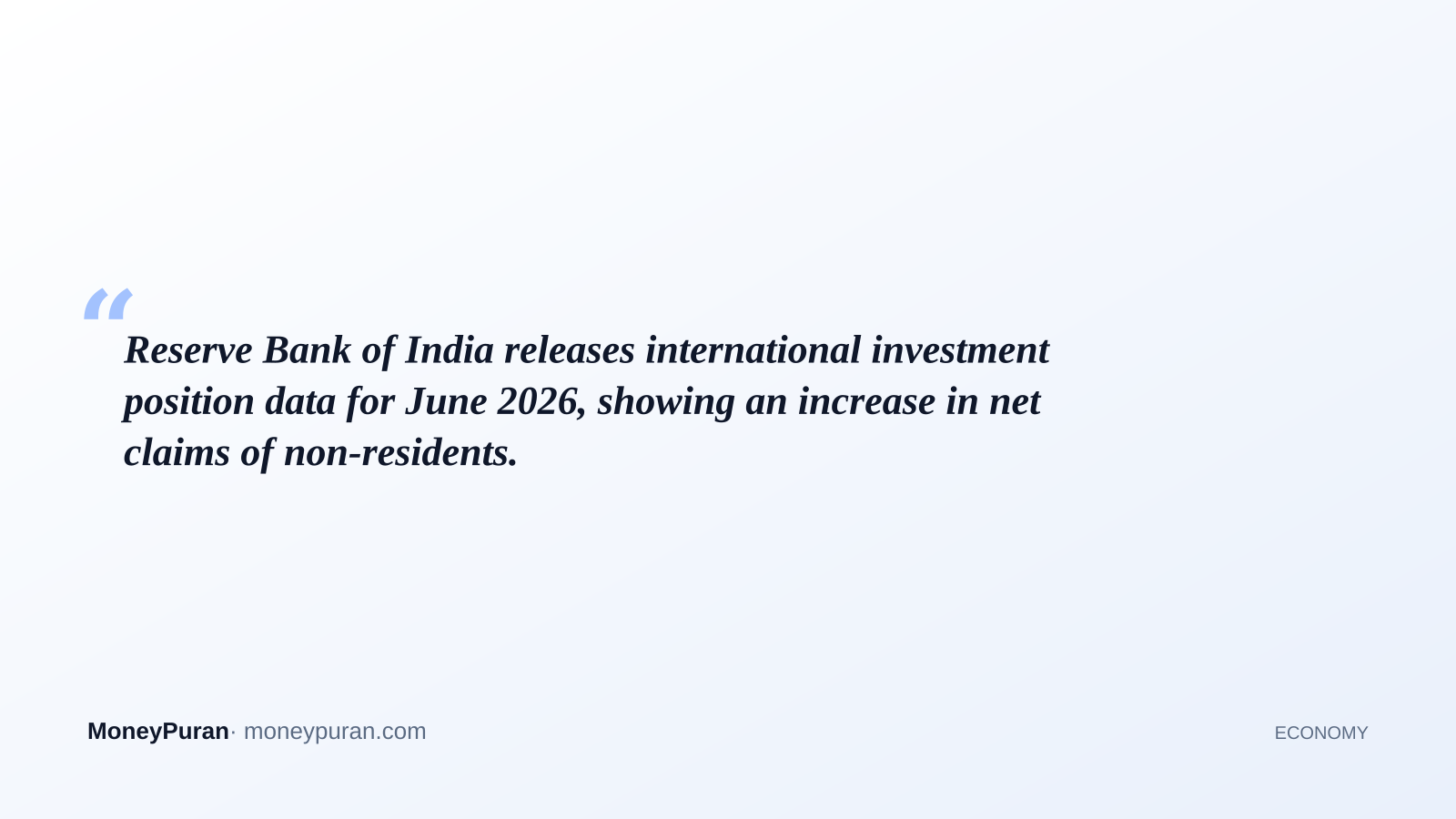
Reserve Bank of India releases international investment position data for June 2026, showing an increase in net claims of non-residents.
Key points
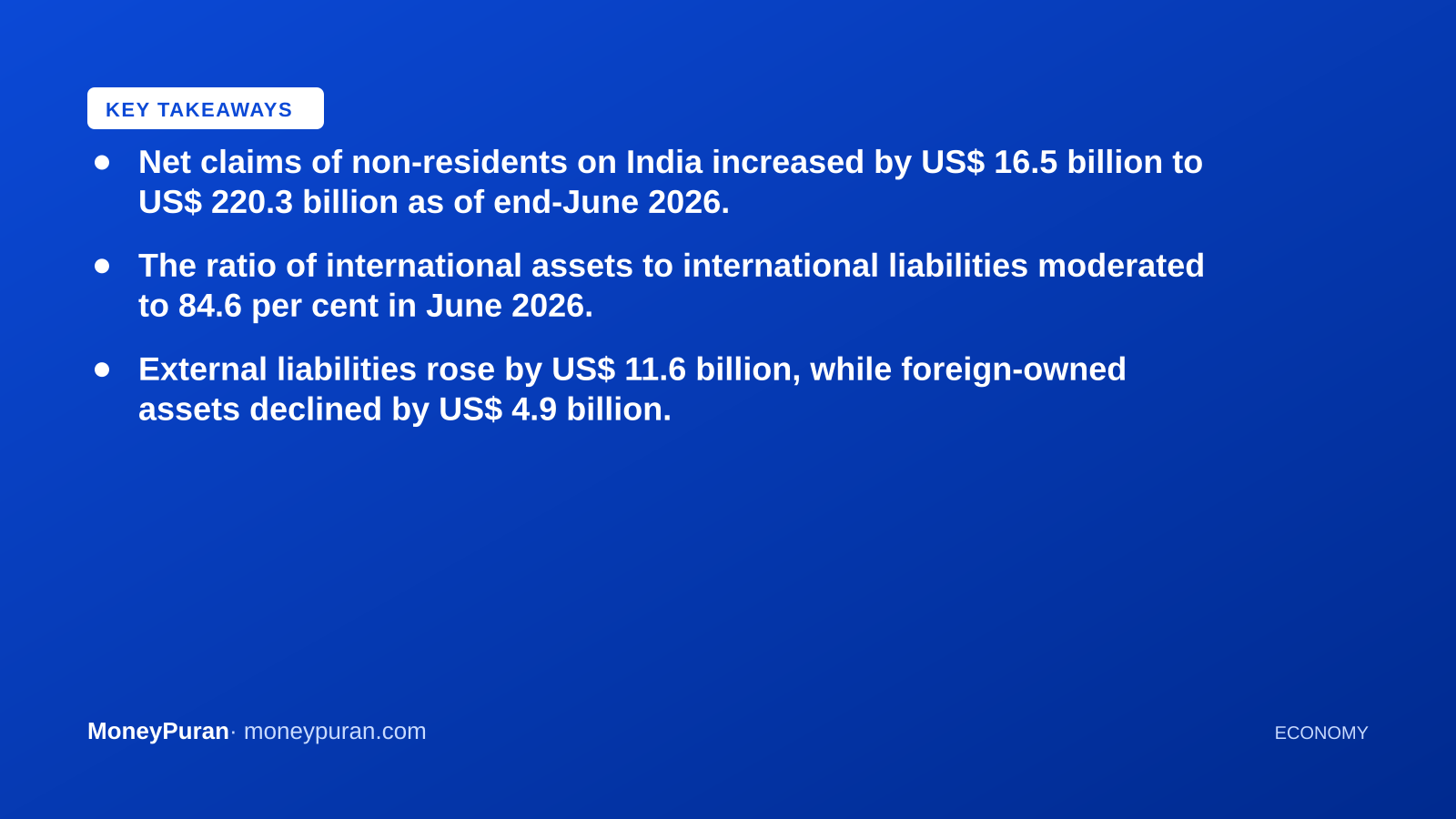
- Net claims of non-residents on India increased by US$ 16.5 billion to US$ 220.3 billion as of end-June 2026.
- The ratio of international assets to international liabilities moderated to 84.6 per cent in June 2026.
- External liabilities rose by US$ 11.6 billion, while foreign-owned assets declined by US$ 4.9 billion.
- Debt liabilities accounted for 56.9 per cent of total external liabilities at the end of June 2026.
India’s net international investment position showed an increase in claims by non-residents during the first quarter of the 2026-27 financial year, according to data released by the Reserve Bank of India. Net claims of non-residents rose by US$ 16.5 billion, bringing the total to US$ 220.3 billion as of end-June 2026. The shift was driven by an increase of US$ 11.6 billion in external liabilities alongside a US$ 4.9 billion decline in foreign-owned assets held by residents.
Composition of Assets and Liabilities
The Reserve Bank of India data indicates that the ratio of India’s international assets to international liabilities moderated to 84.6 per cent at the end of June 2026, down from 85.7 per cent recorded in the previous quarter. Total international assets stood at US$ 1,212.5 billion, with reserve assets making up 55.1 per cent of that total, while overseas direct investment accounted for over a quarter of financial assets.
On the liabilities side, total external liabilities reached US$ 1,432.8 billion. The increase in foreign liabilities was primarily supported by direct investment inflows of US$ 15.7 billion and other investments of US$ 4.2 billion, which offset a reduction of US$ 14 billion in portfolio equity investments. Furthermore, debt liabilities continued a gradual upward trend, representing 56.9 per cent of total external liabilities by the close of June.
What this means for investors
The International Investment Position (IIP) provides a comprehensive summary of a nation’s stock of external financial assets and liabilities. For Indian investors and market participants, tracking these cross-border capital flows helps gauge the country’s external economic vulnerability, foreign exchange reserve buffers, and overall reliance on foreign debt versus equity.
A growing share of debt liabilities relative to total external liabilities highlights the importance of monitoring global interest rate cycles and foreign exchange rate movements. While robust reserve assets provide a cushion against external shocks, shifts in direct and portfolio investments reflect changing foreign sentiment toward Indian corporate assets and domestic capital markets.
Frequently asked questions
What is India’s International Investment Position? It is a statistical statement published by the Reserve Bank of India that details the stock of external financial assets and liabilities of the country at a specific point in time.
Why did net claims of non-residents increase? The increase was mainly driven by a rise in external liabilities of US$ 11.6 billion combined with a decrease of US$ 4.9 billion in foreign-owned assets held by Indian residents.
This article is for information only and is not investment advice. Do your own research or consult a licensed adviser before investing.
Based on information published by Reserve Bank of India (RBI). Source: Reserve Bank of India (RBI). Spotted an error? corrections@moneypuran.com