 Money
Money

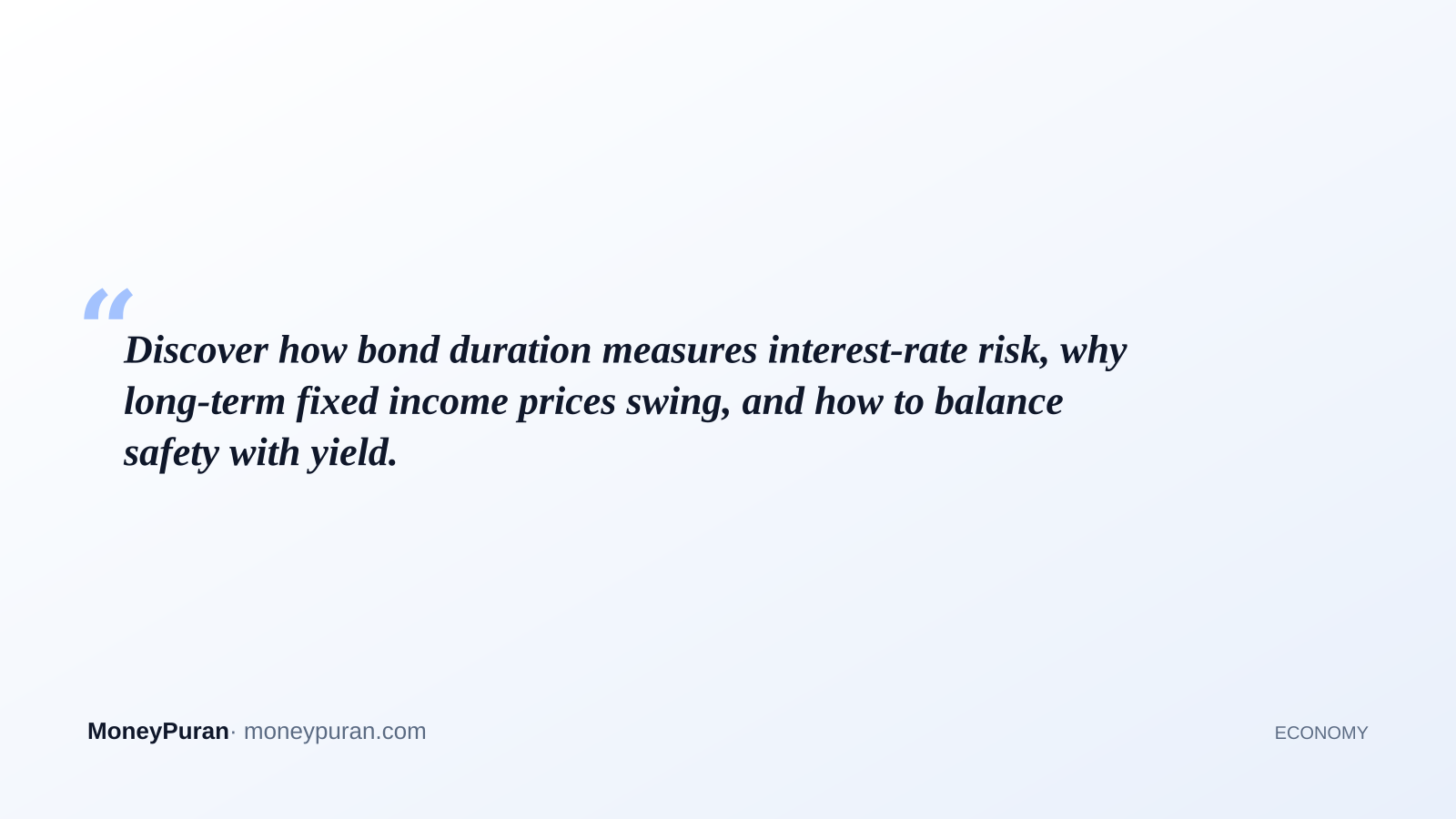
Discover how bond duration measures interest-rate risk, why long-term fixed income prices swing, and how to balance safety with yield.
Key points
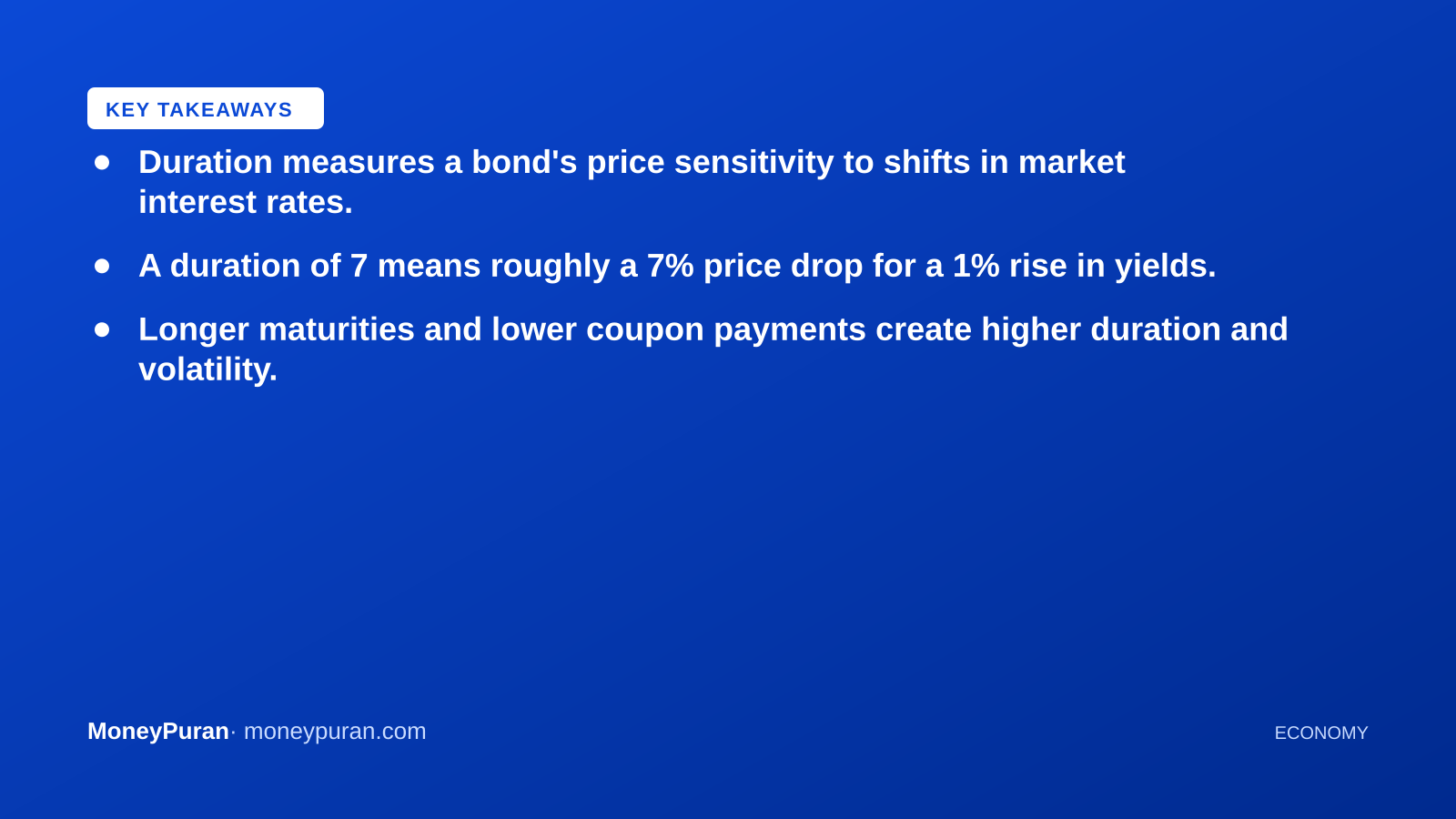
- Duration measures a bond’s price sensitivity to shifts in market interest rates.
- A duration of 7 means roughly a 7% price drop for a 1% rise in yields.
- Longer maturities and lower coupon payments create higher duration and volatility.
- Investors can choose short-duration funds to minimize price swings, trading off higher yields.
When people think of fixed-income investing, they often assume safety. Yet fixed-income assets can experience significant price volatility when macroeconomic conditions shift. The core metric that explains this price movement is bond duration. Understanding this concept allows investors to gauge how market changes will impact their capital long before those changes happen.
How duration measures price sensitivity
In simple terms, duration measures how much a bond’s price will move when interest rates change. Unlike maturity—which is simply the date when the issuer repays the principal—duration calculates the weighted average time it takes to receive all the bond’s cash flows, including both interest payments and the return of principal.
As a rule of thumb, a duration of 7 means that if market yields rise by one percentage point, the bond’s price will fall by roughly 7%. Conversely, if yields drop by one percentage point, the price will rise by about 7%. This inverse relationship between interest rates and fixed-income prices is the foundation of interest-rate risk.
Why some safe bonds still lose money
Many investors were surprised when supposedly safe long-term government bond funds dropped sharply during recent periods of rising central bank interest rates. The reason lies in their high duration profiles. When new issues come to market paying higher yields, older holdings paying lower coupon rates instantly become less attractive to buyers. To find a buyer, the price of the older holding must fall until its effective yield matches current market conditions.
Several structural factors influence this sensitivity:
- Maturity length: The further away the maturity date, the more time interest rates have to fluctuate, increasing overall price risk.
- Coupon size: Higher regular coupon payments return your capital faster, which lowers duration. Lower coupons mean you wait longer for your cash, raising duration.
- Yield levels: Higher starting yields generally translate to slightly lower duration because the cash flows arrive with more relative weight upfront.
Balancing risk and return in your portfolio
Managing fixed-income exposure requires making deliberate trade-offs between yield and stability. If you need capital protection over a short horizon, short-duration holdings trade away some potential income in exchange for minimal price fluctuation. If you have a multi-year time horizon and can tolerate temporary paper losses, longer-duration assets lock in higher yields for extended periods.
To build a resilient allocation, consider the following steps:
- Evaluate your personal time horizon and liquidity needs before selecting any fixed-income product.
- Check the average duration listed in your fund’s fact sheet rather than looking only at the maturity date.
- Match short-term goals with short-duration assets to avoid selling during a temporary market downturn.
- Rebalance periodically to ensure your portfolio risk aligns with your changing life stages.
How regulatory frameworks apply in the US and India
While the financial mathematics of duration remain universal, the regulatory environment and specific products differ across jurisdictions. In the United States, retail investors frequently buy individual Treasuries, corporate bonds, or mutual funds and ETFs through brokers regulated by FINRA and the SEC. In India, retail investors often access fixed income through government securities via the RBI’s Retail Direct platform, or through debt mutual funds regulated strictly by SEBI.
Tax treatment also varies significantly. In the US, interest from federal bonds is exempt from state and local taxes, though subject to federal income tax. In India, interest from fixed-income instruments is generally added to your total income and taxed according to your individual income tax slab, with specific holding periods determining capital gains rules. Always consult the official guidelines provided by the IRS or the Income Tax Department of India for current regulations.
Frequently asked questions
Is duration the same thing as maturity? No. Maturity is the exact date the principal is repaid, while duration measures the weighted average time to receive all cash flows and reflects actual price sensitivity.
Do rising interest rates always hurt bondholders? Rising rates lower the market price of existing holdings, which harms you if you sell early. However, if you hold the bond to maturity, you receive your full principal back, and reinvested coupons buy new units at higher yields.
How do I find a fund’s duration? Every regulated mutual fund or ETF publishes its portfolio characteristics, including effective duration, on its monthly fact sheet or official website.
This article is for general education and is not investment, tax or financial advice. Rules and figures change — check the official source or a licensed adviser before acting.
Official information: https://www.investor.gov
This explainer is published by the MoneyPuran desk for general awareness. Rules, limits and rates change over time — please confirm with the official source. Corrections: corrections@moneypuran.com