 Money
Money

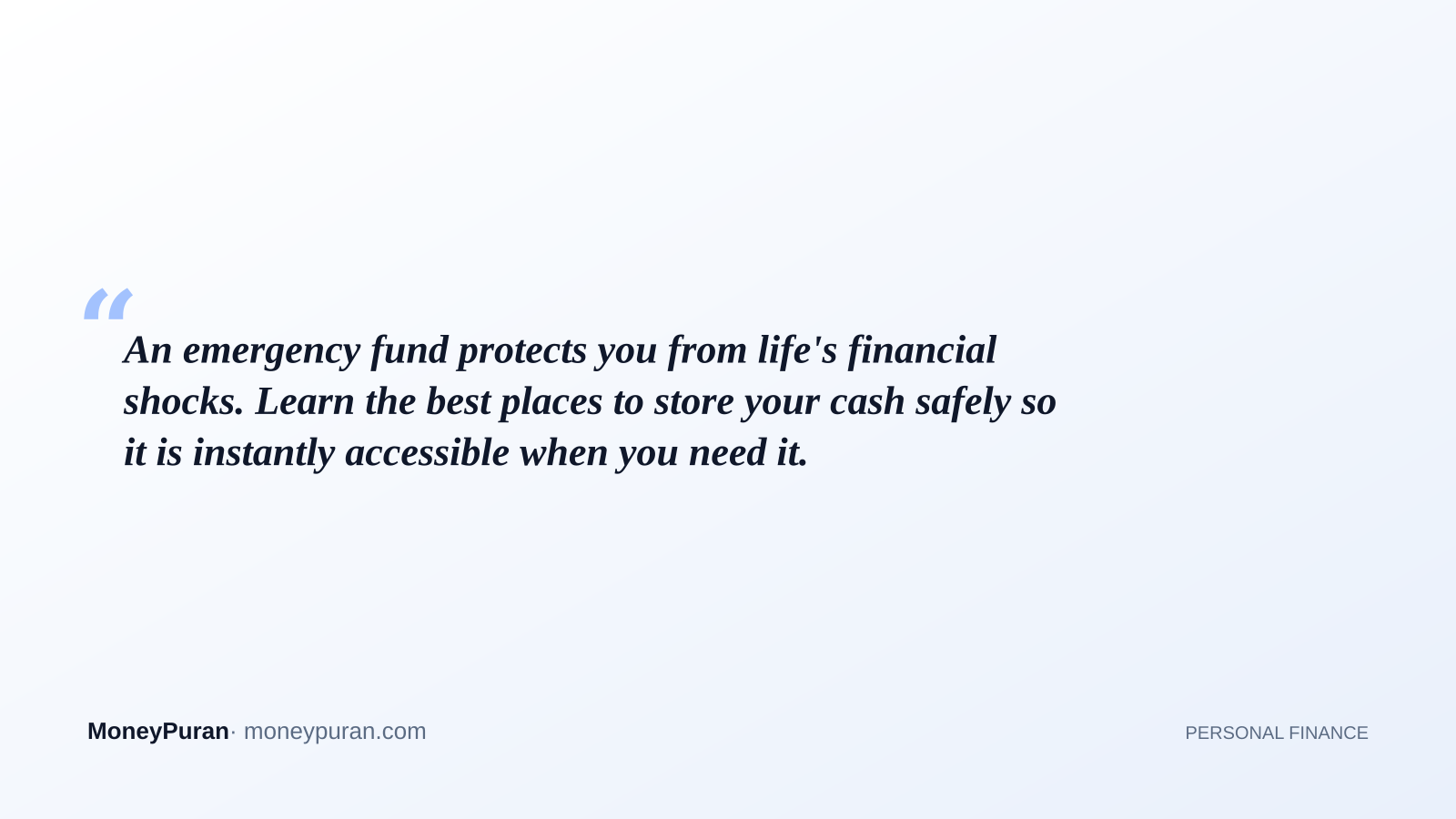
An emergency fund protects you from life’s financial shocks. Learn the best places to store your cash safely so it is instantly accessible when you need it.
Key points
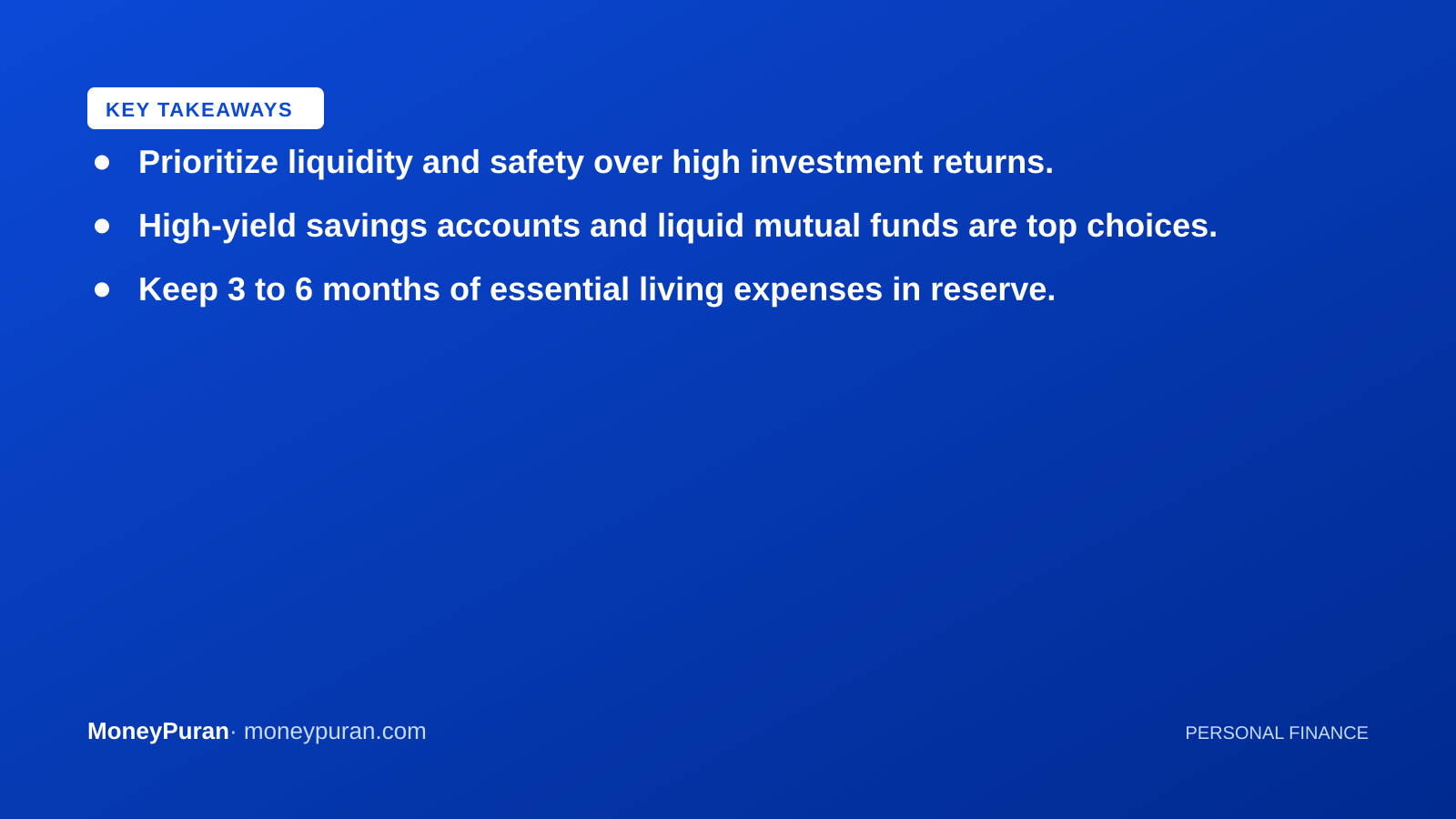
- Prioritize liquidity and safety over high investment returns.
- High-yield savings accounts and liquid mutual funds are top choices.
- Keep 3 to 6 months of essential living expenses in reserve.
- Avoid locking emergency cash into stocks or long-term assets.
When unexpected expenses arise, having cash ready is essential for your financial peace of mind. Knowing where to keep emergency fund savings ensures you can handle job loss, medical emergencies, or urgent home repairs without going into high-interest debt. The golden rule of emergency savings is simple: safety and liquidity always trump high returns.
Core Rules for Storing Your Safety Net
Your emergency reserve is not an investment portfolio meant to beat inflation or fund your retirement. It is insurance against life’s unpredictability. Because you never know the exact day you will need the money, the vehicle holding your cash must meet strict criteria.
- Instant Access: You should be able to withdraw the funds within hours or at most a single business day.
- Capital Preservation: The nominal principal amount must remain completely safe from market downturns.
- No Penalties: Avoid accounts that charge hefty fees or forfeit interest for early withdrawals.
Best Options for US and Indian Savers
Depending on whether you live in the United States or India, the specific account names differ, but the underlying financial instruments serve the exact same purpose of high liquidity and zero market risk.
In the United States, a high-yield savings account (HYSA) offered by online banks or credit unions is the gold standard. These accounts offer competitive interest rates compared to traditional brick-and-mortar banks while keeping your money federally insured up to statutory limits. Another option is a money market account, which often comes with check-writing privileges or a debit card for faster access.
In India, savers have great alternatives such as sweep-in fixed deposits linked to a savings account, or liquid and overnight mutual funds. Liquid funds invest in very short-term debt instruments and allow prompt redemption into your bank account, usually by the next working day. Laddering short-term fixed deposits is also a popular strategy to ensure steady monthly liquidity.
Vehicles You Must Avoid
It can be tempting to put cash into higher-yielding assets to make your money work harder. However, doing so defeats the entire purpose of a safety buffer. Never put your emergency cash into equities, mutual funds with high equity exposure, cryptocurrencies, or long-term locked instruments like tax-saving deposits or real estate.
If a market crash coincides with a personal emergency, selling risk assets at a loss can permanently damage your financial health. Keep your emergency cash completely separated from your wealth-building portfolio.
How Much Cash You Actually Need
Before parking your money, ensure your fund is sized correctly. Most financial experts recommend setting aside three to six months of essential living expenses. If your household income is volatile, or if you are a freelancer or business owner, scaling that buffer up to nine or twelve months provides a much safer cushion against extended dry spells.
Frequently asked questions
Can I keep my emergency fund in cash at home? Keeping a small amount of physical cash at home for a multi-day power outage or localized banking glitch is wise, but holding your entire emergency fund in cash is unsafe due to theft, fire, and the silent eroding power of inflation.
Should I invest my emergency fund in government bonds? Long-term government bonds can fluctuate in value if interest rates rise before maturity. Stick strictly to short-term instruments, overnight funds, or savings accounts to avoid capital loss.
How often should I review my emergency fund? Review your fund at least once a year or whenever your lifestyle changes significantly, such as moving to a higher rent apartment, having a child, or taking on new monthly debt obligations.
This article is for general education and is not investment, tax or financial advice. Rules and figures change — check the official source or a licensed adviser before acting.
Official information: https://www.investor.gov
This explainer is published by the MoneyPuran desk for general awareness. Rules, limits and rates change over time — please confirm with the official source. Corrections: corrections@moneypuran.com