 Money
Money
When a business buys back its own stock, your slice of the company grows larger. Here is how share buybacks work, when they build real wealth, and when they signal trouble.
Key points
- A share buyback reduces the total number of outstanding shares, increasing earnings per share (EPS) for remaining shareholders.
- Repurchases are a flexible alternative to cash dividends, allowing management to return excess cash tax-efficiently.
- Buybacks funded by heavy debt or executed at bloated stock valuations can destroy shareholder value.
- Rules and taxation differ between the US and India, but the core mechanics of stock repurchases remain the same.
When a publicly traded company accumulates extra profits, management faces an important financial decision: reinvest in business operations, pay cash dividends, or execute a share buyback. Also known as a stock repurchase, a share buyback occurs when a corporation buys its own stock from the open market or directly from current shareholders. This action reduces the total pool of outstanding shares, effectively giving every remaining shareholder a larger slice of the business and its future earnings.
For retail investors, the short answer is that a share buyback is often a positive signal, but its true benefit depends entirely on context. When management repurchases stock at a bargain price using surplus cash flow, it creates lasting value. However, if a company borrows heavily or repurchases overvalued stock just to boost short-term metrics, the move can ultimately hurt long-term investment returns.
How a share buyback works behind the scenes
To understand the mechanics of a repurchase, consider a company that generates $10 million in annual net income and has 10 million shares outstanding. In this scenario, the company has earnings per share (EPS) of $1.00. If the management team decides to use cash reserves to buy back 2 million shares, the total share count drops to 8 million.
Assuming total net income remains unchanged at $10 million, the company’s new EPS instantly jumps to $1.25 ($10 million divided by 8 million shares). Even though total corporate profits did not grow, each remaining share is now entitled to a 25% larger share of those earnings. Over time, a higher EPS often helps lift the market price of the stock, assuming valuation multiples remain steady.
Why companies choose buybacks over cash dividends
Both dividends and stock repurchases are ways for a company to return cash to its owners, but executives frequently prefer repurchases for several strategic reasons:
- Operational flexibility: Shareholders tend to expect regular, uninterrupted dividend payments. Lowering a dividend often triggers market panic. A share buyback, by contrast, can be scaled up, paused, or cancelled at any time without negative publicity.
- Capital allocation signaling: When management buys back stock, it signals to Wall Street and global markets that leadership believes the company is undervalued.
- Offsetting stock compensation: Modern corporations frequently issue stock options and equity awards to managers and employees. Executing periodic buybacks absorbs these new shares and prevents dilution for existing investors.
- Tax efficiency: In many jurisdictions, receiving a cash dividend triggers an immediate taxable event for the investor. A share buyback pushes capital gains into the future, letting value compound tax-deferred until the investor decides to sell.
The major pros and cons of share buybacks
While boosting EPS sounds universally positive, share buybacks carry distinct advantages and risks that every investor should monitor carefully.
- Pro: Increased ownership stake: Your proportional claim on future dividends and earnings rises automatically without requiring you to buy more shares.
- Pro: Better financial ratios: Lowering the share count improves key metrics such as EPS and return on equity (ROE), making the business appear more efficient.
- Con: Value destruction through overpaying: If executives repurchase shares at the peak of a market cycle when the stock is overpriced, they waste corporate cash that could have been better spent on research or expansion.
- Con: Risky debt financing: Some companies issue bonds or take on high-interest debt specifically to fund buybacks. This artificially boosts short-term metrics while increasing long-term balance sheet fragility.
- Con: Masking stagnant growth: A company with flat or declining net income can make its EPS look healthy simply by shrinking its share count month after month.
How share buyback rules differ in the US and India
While the economic goal of a buyback is identical worldwide, legal mechanics and tax treatments vary by country.
In the United States, most buybacks occur on the open market under SEC Rule 10b-18, which provides safe harbor protection against market manipulation claims if companies follow specific timing and volume limits. American investors generally face capital gains taxes only when they choose to sell their holdings, though corporations themselves face a modest federal excise tax on net repurchases.
In India, share buybacks are tightly monitored by the Securities and Exchange Board of India (SEBI) and governed by the Companies Act. Indian firms typically execute buybacks through tender offers—where shareholders voluntarily submit their shares at a pre-announced fixed price—or through open-market purchases. Taxation rules in India have undergone notable updates, shifting tax liabilities between the corporation and the individual investor depending on current tax framework amendments. Investors in India should verify current guidance directly from the Income Tax Department or SEBI.
4 steps to evaluate if a share buyback creates value
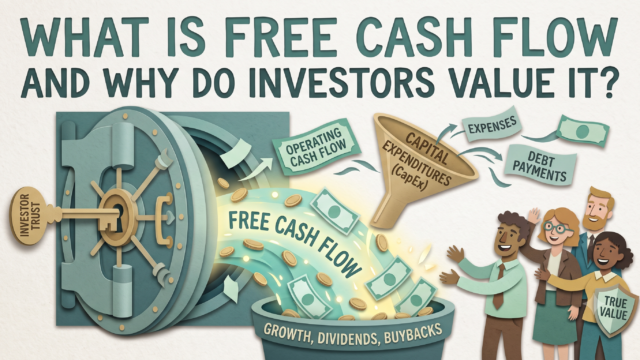
- Examine the cash source: Open the cash flow statement to confirm that the buyback is funded by organic free cash flow rather than short-term loans or corporate debt.
- Evaluate stock valuation: Compare the stock’s current price-to-earnings (P/E) ratio against historical averages to see if management is buying shares at a fair or discounted price.
- Check net share count reduction: Read the quarterly earnings report to verify that the total share count is actually falling, rather than merely offsetting executive option dilution.
- Review core profit growth: Ensure that operating revenues and net profits are growing alongside EPS, proving that the underlying core business remains healthy.
Frequently asked questions
Does a share buyback force me to sell my stock?
No. In an open-market buyback, the company buys shares from willing sellers in the public market. In a tender offer buyback, deciding whether to participate is completely voluntary.
How does a share buyback affect stock prices?
In the short term, a buyback can drive price increases due to added buying demand and positive earnings announcements. Over the long term, sustainable price gains depend on the company’s operational growth and valuation.
What happens to repurchased shares?
Repurchased shares are usually cancelled or held in the corporate treasury as non-voting, non-dividend-paying shares. Cancelled shares permanently reduce the official share count.
Are share buybacks better than cash dividends?
Neither approach is universally better. Dividends offer predictable income for cash-focused investors, whereas buybacks offer tax-deferred capital growth potential for long-term holders.
This article is for general education and is not investment, tax or financial advice. Rules and figures change — check the official source or a licensed adviser before acting.
Official information: https://www.investor.gov
This explainer is published by the MoneyPuran desk for general awareness. Rules, limits and rates change over time — please confirm with the official source. Corrections: corrections@moneypuran.com