 Money
Money

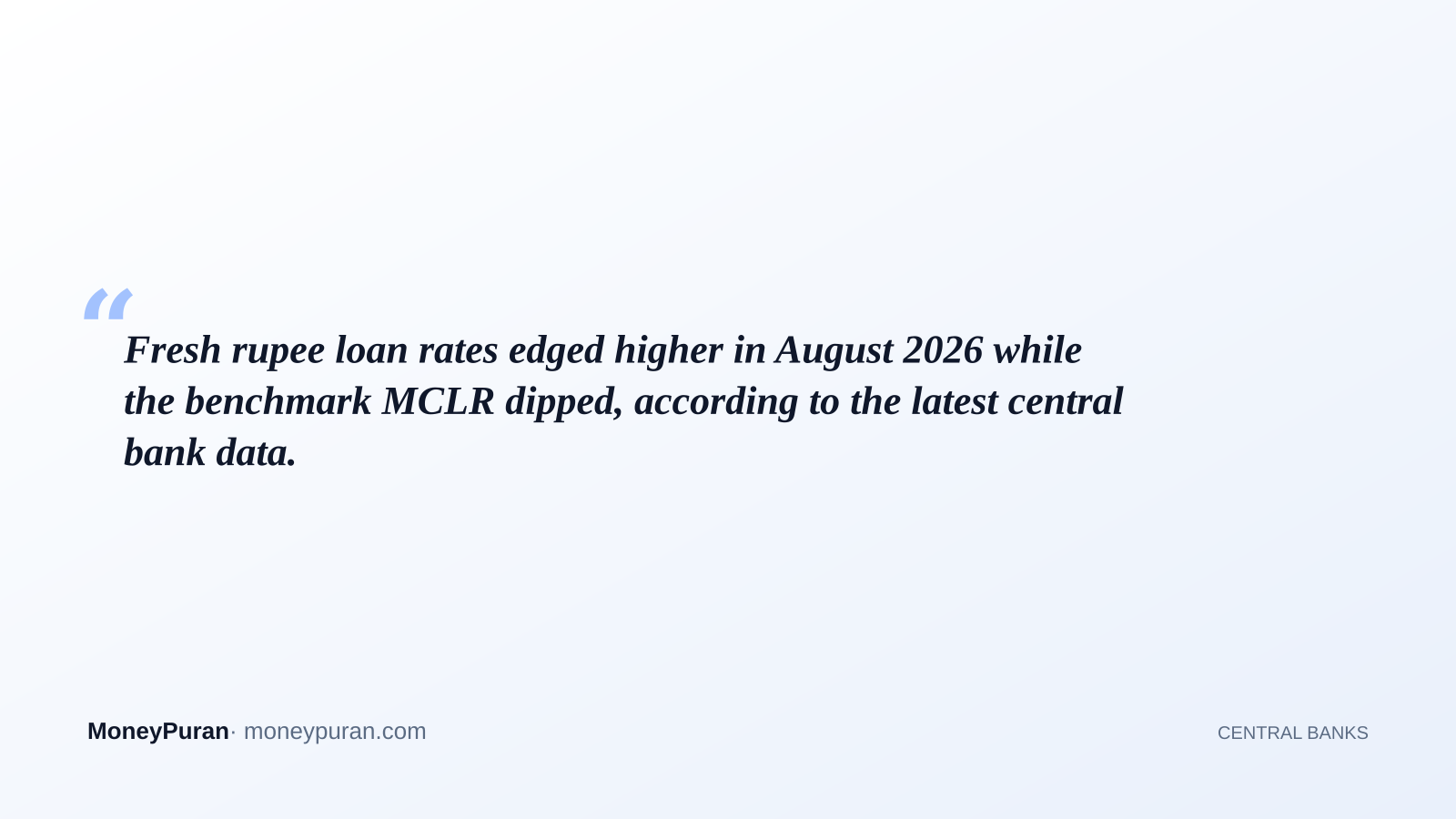
Fresh rupee loan rates edged higher in August 2026 while the benchmark MCLR dipped, according to the latest central bank data.
Key points
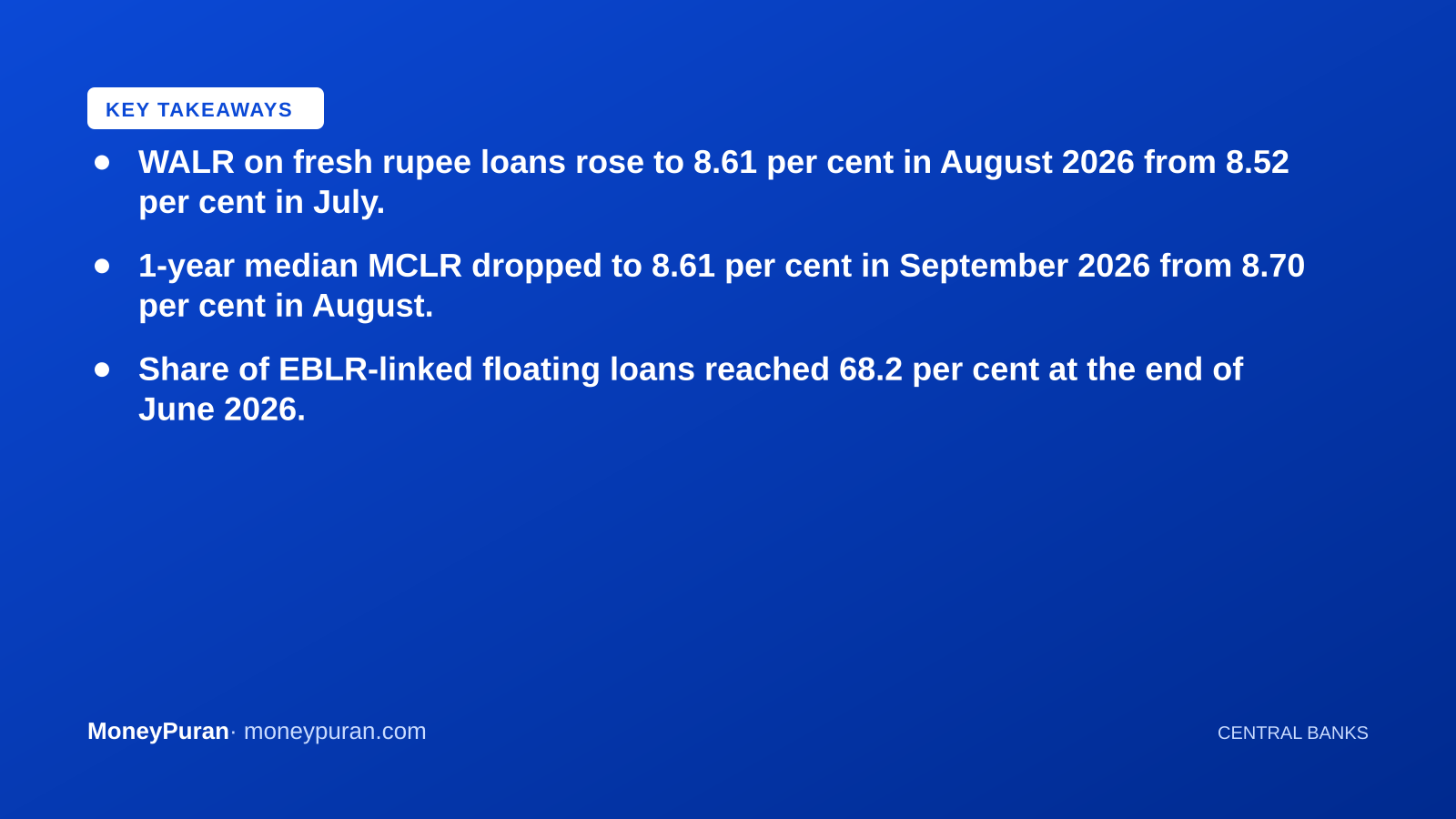
- WALR on fresh rupee loans rose to 8.61 per cent in August 2026 from 8.52 per cent in July.
- 1-year median MCLR dropped to 8.61 per cent in September 2026 from 8.70 per cent in August.
- Share of EBLR-linked floating loans reached 68.2 per cent at the end of June 2026.
- Weighted average term deposit rate on fresh deposits fell to 5.67 per cent in August.
The Reserve Bank of India has released its latest monthly data regarding the lending and deposit rates of scheduled commercial banks for August and September 2026, revealing nuanced shifts in borrowing costs across the banking sector. The weighted average lending rate on fresh rupee loans ticked upward during August, even as benchmark marginal cost-based lending rates declined heading into September.
According to the central bank release issued by Deputy General Manager Ajit Prasad, the weighted average lending rate (WALR) on fresh rupee loans climbed to 8.61 per cent in August 2026, compared with 8.52 per cent the previous month. Meanwhile, the WALR on outstanding rupee loans saw a fractional decline, moving from 8.97 per cent in July down to 8.96 per cent in August.
Benchmark Shifts and Deposit Rates
Banks reported movement across their internal benchmarks as well. The 1-year median Marginal Cost of Funds based Lending Rate (MCLR) fell to 8.61 per cent in September 2026, easing down from 8.70 per cent in August. The data also highlighted structural patterns in floating rate loans, showing that External Benchmark based Lending Rate (EBLR) linked loans expanded to account for 68.2 per cent of total outstanding floating rate rupee loans at the end of June 2026, up from 67.6 per cent at the end of March.
On the liability side, savers experienced moderation in returns on term deposits. The weighted average domestic term deposit rate (WADTDR) on outstanding rupee term deposits slipped marginally to 6.56 per cent in August 2026. A more pronounced easing occurred in newly booked deposits, where the WADTDR on fresh rupee term deposits dropped to 5.67 per cent in August from 5.85 per cent in July.
- WALR on outstanding rupee loans: 8.96% in August 2026
- WALR on fresh rupee loans: 8.61% in August 2026
- 1-year median MCLR: 8.61% in September 2026
- EBLR share in floating rate loans: 68.2% at end-June 2026
- WADTDR on fresh term deposits: 5.67% in August 2026
What this means for investors
For Indian investors and borrowers, these central bank figures underline the ongoing transmission dynamics within the commercial banking ecosystem. When fresh lending rates rise while benchmark MCLRs decline, borrowers may experience divergent pricing outcomes depending on whether their credit facilities are tied to external benchmarks, MCLR, or older lending frameworks.
For retail and institutional depositors, falling fresh term deposit rates signal that banks are adjusting liability costs downwards. Investors allocating capital into fixed-income instruments should monitor how individual lenders recalibrate their deposit schedules in response to systemic liquidity and credit demand trends.
Frequently asked questions
What is the difference between WALR on fresh and outstanding loans? The weighted average lending rate on fresh loans captures pricing on agreements executed during the specific month, whereas outstanding loans reflect the aggregate portfolio rate across older and active credit accounts.
Why do external benchmarks matter for floating rate loans? External benchmarks like the repo rate allow for faster monetary policy transmission to retail borrowers compared to internal bank benchmarks such as the MCLR.
This article is for information only and is not investment advice. Do your own research or consult a licensed adviser before investing.
Based on information published by Reserve Bank of India (RBI). Source: Reserve Bank of India (RBI). Spotted an error? corrections@moneypuran.com