 Money
Money
A comprehensive, practical guide comparing precious metals investing across stability, volatility, and cross-border regulatory rules.
Key points
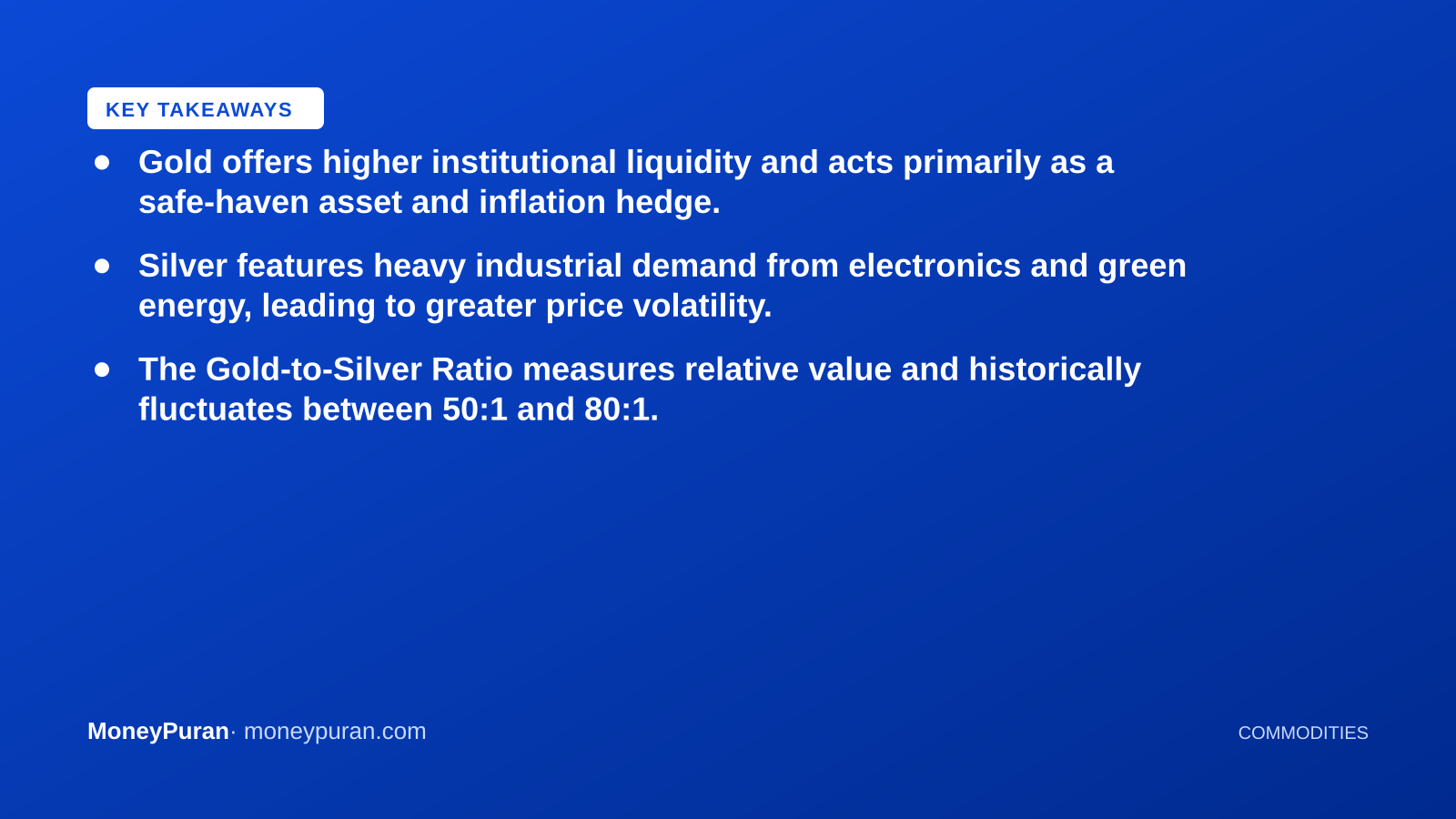
- Gold offers higher institutional liquidity and acts primarily as a safe-haven asset and inflation hedge.
- Silver features heavy industrial demand from electronics and green energy, leading to greater price volatility.
- The Gold-to-Silver Ratio measures relative value and historically fluctuates between 50:1 and 80:1.
- Investment structures range from physical bullion and ETFs to mining equities, with distinct tax treatments in the US and India.
When building a diversified portfolio, executing a thorough gold vs silver investment comparison is essential for balancing safety against growth. Both precious metals serve as traditional inflation hedges and safe-haven assets, but their underlying market drivers, price behaviors, and liquidity profiles differ dramatically. Understanding these traits helps investors determine which metal—or combination—fits their long-term financial goals.
Core Differences in Market Drivers and Liquidity
Gold is primarily driven by institutional investors, central banks, and jewelry demand. Because of its massive global market cap and deep liquidity, gold tends to hold its purchasing power steadily during economic turmoil. For live tracking, investors often monitor the gold rate today in India alongside international spot benchmarks.
Silver, on the other hand, occupies a dual role as both a monetary metal and an essential industrial commodity. Found heavily in electronics, solar panels, and medical equipment, silver’s price responds aggressively to shifts in manufacturing activity. This industrial dependency makes silver significantly more volatile than gold, creating opportunities for larger price swings in both directions. You can track current pricing trends using tools that follow the silver rate today across global exchanges.
The Gold-to-Silver Ratio Explained
The primary valuation metric used by analysts is the Gold-to-Silver Ratio. This figure represents how many ounces of silver it takes to buy one single ounce of gold at current spot prices. Historically, this ratio has fluctuated between 50:1 and 80:1.
When the ratio climbs toward the higher end of its historical range, silver is traditionally viewed by value investors as undervalued relative to gold. Conversely, when the ratio drops, gold may be considered relatively cheap. While this metric does not time the market perfectly, it provides a valuable benchmark for asset allocation.
Investment Vehicles and Accessibility
Investors can access both metals through multiple channels, depending on personal risk tolerance and storage preferences:
- Physical Bullion: Coins and bars offer tangible ownership with zero counterparty risk, though they require secure storage and insurance.
- Exchange-Traded Funds (ETFs): Paper or digital funds track spot prices without physical handling fees, offering high liquidity.
- Mining Equities: Shares in gold and silver mining companies offer leveraged exposure to metal prices, though they carry company-specific operational risks.
US and India Regulatory and Tax Variations
Taxation and market access vary significantly between jurisdictions. In the United States, physical precious metals are often taxed as collectibles at the federal level when sold at a gain, while ETFs may be subject to different capital gains rules depending on the fund structure. Regulatory oversight is managed by bodies like the SEC and CFTC.
In India, physical gold and silver carry customs duties and Goods and Services Tax (GST) upon purchase. Sovereign Gold Bonds (SGBs) and digital gold alternatives offer unique domestic structures, while capital gains taxes apply depending on the holding period. Investors should check official updates from the IRS or SEC in the US, and the Reserve Bank of India (RBI) or Securities and Exchange Board of India (SEBI) for current tax slabs.
Frequently Asked Questions
Which metal is safer for long-term wealth preservation? Gold is generally considered the more stable store of value due to lower industrial volatility and massive central bank reserves.
Why does silver experience sharper price movements? Because silver’s market is smaller and heavily tied to industrial manufacturing, sudden changes in factory demand amplify price swings.
Can I hold precious metals in retirement accounts? Yes, certain self-directed IRAs in the US allow physical bullion ownership provided specific purity and custody rules are met.
This article is for general education and is not investment, tax or financial advice. Rules and figures change — check the official source or a licensed adviser before acting.
Official information: https://www.investor.gov
This explainer is published by the MoneyPuran desk for general awareness. Rules, limits and rates change over time — please confirm with the official source. Corrections: corrections@moneypuran.com