 Money
Money
Central bank steps in due to deteriorating financial health at the Afzalpur-based lender, blocking depositor withdrawals and fresh lending for six months.
Key points
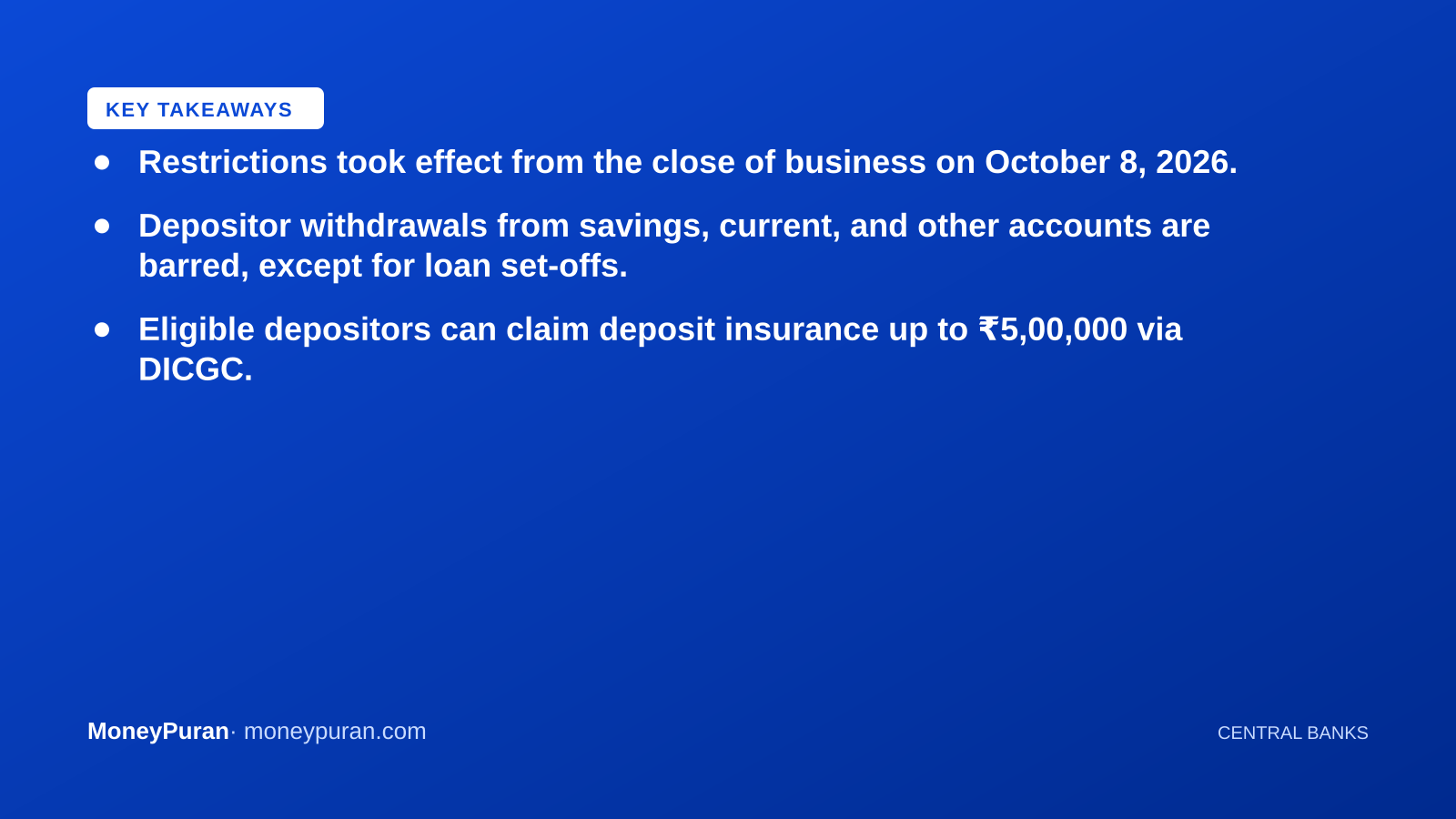
- Restrictions took effect from the close of business on October 8, 2026.
- Depositor withdrawals from savings, current, and other accounts are barred, except for loan set-offs.
- Eligible depositors can claim deposit insurance up to ₹5,00,000 via DICGC.
- The directive remains in force for six months and does not mean cancellation of the banking license.
The Reserve Bank of India (RBI) has slapped stringent business restrictions on Sri Mahatma Basaveshwar Co-operative Bank Ltd., located in Afzalpur, citing deteriorating financial metrics and inadequate corrective action by the management. Effective from the close of business on October 8, 2026, the lender can no longer grant or renew loans, accept fresh deposits, make investments, or incur new liabilities without prior written approval from the central bank.
According to the official notification issued by Chief General Manager Brij Raj, the regulatory clampdown also bars the bank from disbursing any payments toward obligations or selling any assets, except for permitted operational expenses like employee salaries, rent, and electricity bills. Crucially, given its current liquidity position, the lender has been directed not to allow any withdrawals from savings, current, or other depositor accounts, though customers can set off existing loans against their deposits under specific conditions.
Background on supervisory concerns
The regulatory intervention follows years of engagement between the central bank and the leadership of Sri Mahatma Basaveshwar Co-operative Bank. The RBI noted that the board and senior management failed to take concrete steps to resolve underlying supervisory worries, leaving the central bank with no alternative but to step in to safeguard depositor interests under Section 35A of the Banking Regulation Act, 1949.
Despite the severe curbs, the central bank clarified that the directive does not amount to a formal cancellation of the banking license. The institution is permitted to continue undertaking restricted banking operations while its financial standing is monitored. The current directions will remain in effect for an initial period of six months and will be subject to continuous regulatory review.
What this means for your money
For retail savers holding funds with the affected cooperative bank, the immediate freeze on withdrawals can cause distress, but a safety net exists through deposit insurance. Eligible depositors are entitled to receive claim amounts up to a monetary ceiling of ₹5,00,000 from the Deposit Insurance and Credit Guarantee Corporation (DICGC). Claimants must submit their willingness and undergo due verification through the bank and the DICGC portal.
Cooperative banks in India operate under dual regulatory control involving state registrars and the RBI, which often creates challenges in early identification of stress. Savers should regularly review the financial health and capital adequacy of smaller cooperative institutions, keeping individual deposit balances within the DICGC insurance limit of ₹5 lakh per bank to protect personal savings from sudden regulatory moratoriums.
Frequently asked questions
Can I still withdraw money from my account at Sri Mahatma Basaveshwar Co-operative Bank? No, withdrawals from savings, current, and other accounts are currently prohibited under the RBI directive, except where loan set-offs are applicable.
Is the bank’s license cancelled? No, the issuance of these directions does not mean the banking license is cancelled. The lender continues to operate under strict regulatory monitoring.
How do I claim my insured deposits? Eligible depositors can receive up to ₹5,00,000 through the DICGC by submitting their claim willingness and completing verification procedures with bank officials.
This article is for information only and is not investment advice. Do your own research or consult a licensed adviser before investing.
Based on information published by Reserve Bank of India (RBI). Source: Reserve Bank of India (RBI). Spotted an error? corrections@moneypuran.com