 Money
Money

Indian benchmark equity indices fell over 1% as sharp rupee depreciation against the US dollar pressured broader market sentiment.
Key points
- BSE Sensex dropped 795.82 points (-1.05%) to close at 74,781.76, recovering slightly from an intraday low of 74,160.16.
- NSE Nifty 50 fell 237 points (-1.00%) to finish at 23,398.10, slipping below the psychological 23,400 level.
- Nifty Bank demonstrated relative resilience, declining 0.30% to settle at 56,606.55.
- The Indian rupee (USD/INR) weakened significantly by 1.12% to trade at 95.55 per US dollar.
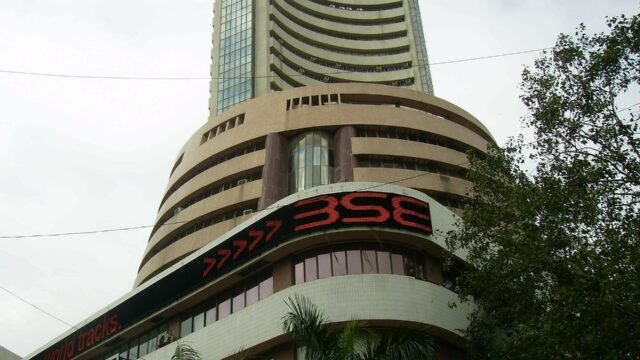
Indian equities faced sharp selling pressure in session, with benchmark indices losing over 1% as currency weakness weighed on broader sentiment. The Sensex today dropped 795.82 points, or 1.05%, to close at 74,781.76, while the broader Nifty 50 index fell 237 points, or 1.00%, to end at 23,398.10. A steep decline in the Indian rupee against the US dollar exacerbated market stress, driving foreign capital outflow concerns across key sectors.
Benchmark indices slide in volatile session
Trading opened under mild pressure before momentum turned heavily defensive around midday. The BSE Sensex swung through a wide intra-day range of 756.99 points, touching a session high of 74,917.15 before falling to an intraday low of 74,160.16. The index eventually settled near the upper end of its lowest band, down from the previous close of 75,577.58.
Similarly, the NSE Nifty 50 traded between a high of 23,448.10 and a low of 23,231.40 before settling at 23,398.10. The loss pulled the benchmark below key technical psychological levels, signaling widespread profit-taking across large-cap holdings. Investors tracking why the market moved today noted that broad-based liquidation overshadowed selective buying in defensive pockets.
Banking stocks outperform broader market slump
While headline indices experienced notable declines, banking equities displayed relative resilience throughout the trading day. The Nifty Bank index fell just 0.30%, or 171 points, to end at 56,606.55 after touching a low of 55,699.45. The index benefited from steady buying interest in major private and public lenders, mitigating deeper losses for the financial sector.
The divergence between the headline Nifty 50 and the banking index highlights a rotation where market participants favored well-capitalized lenders over energy, consumer, and technology names. However, the intra-day swings across banking tickers underscore ongoing caution ahead of upcoming macroeconomic data points and central bank signals.
Rupee weakens sharply past 95.50 mark
Foreign exchange markets witnessed elevated volatility as the US dollar strengthened markedly against the Indian rupee. The USD/INR currency pair jumped 1.12% to trade at 95.55, up from the previous session close of 94.49. Throughout the day, the pair moved tightly between 95.54 and 95.55, reflecting sustained pressure on the domestic currency.
A weakening rupee typically increases import costs for major domestic industries, including crude oil importers and electronics manufacturers. Simultaneously, currency depreciation can alter Foreign Institutional Investor (FII) equity allocation strategies, as dollar-denominated returns are diminished when domestic assets decline alongside the local currency.
What this means for investors
For retail investors, market corrections accompanied by currency depreciation require a balanced asset allocation strategy rather than hasty tactical changes. When benchmark indices fall by 1% or more alongside rupee weakness, import-heavy businesses often face margin pressures, whereas net exporters such as information technology and pharmaceutical companies may experience short-term revenue tailwinds when converting overseas earnings.
Short-term traders should pay close attention to index support zones, particularly how the Nifty 50 behaves near the 23,200 level and how the Sensex defends its recent lows around 74,160. Long-term investors typically view orderly market consolidations as opportunities to review portfolio exposure, focusing on companies with robust balance sheets, strong domestic pricing power, and low external debt burdens.
Monitoring foreign capital flows over the coming sessions will provide clearer signals regarding institutional risk appetite. Persistent currency weakness can lead foreign funds to temporarily trim exposure to emerging markets, making it vital to watch regulatory announcements, trade data updates, and central bank foreign exchange interventions.
Frequently asked questions
Where did the Sensex and Nifty close today? The BSE Sensex closed down 1.05% at 74,781.76, while the NSE Nifty 50 dropped 1.00% to finish at 23,398.10.
How did the Indian rupee perform against the US dollar? The Indian rupee depreciated by 1.12%, with the USD/INR exchange rate settling at 95.55 compared to 94.49 in the previous trading session.
How did banking stocks perform relative to the broader market? Banking stocks showed resilience, with the Nifty Bank index declining only 0.30% to close at 56,606.55, outperforming the 1.00% drop seen in the benchmark Nifty 50.
This article is for information only and is not investment advice. Do your own research or consult a licensed adviser before investing.
Based on information published by MoneyPuran market data. Source: MoneyPuran market data. Spotted an error? corrections@moneypuran.com