 Money
Money
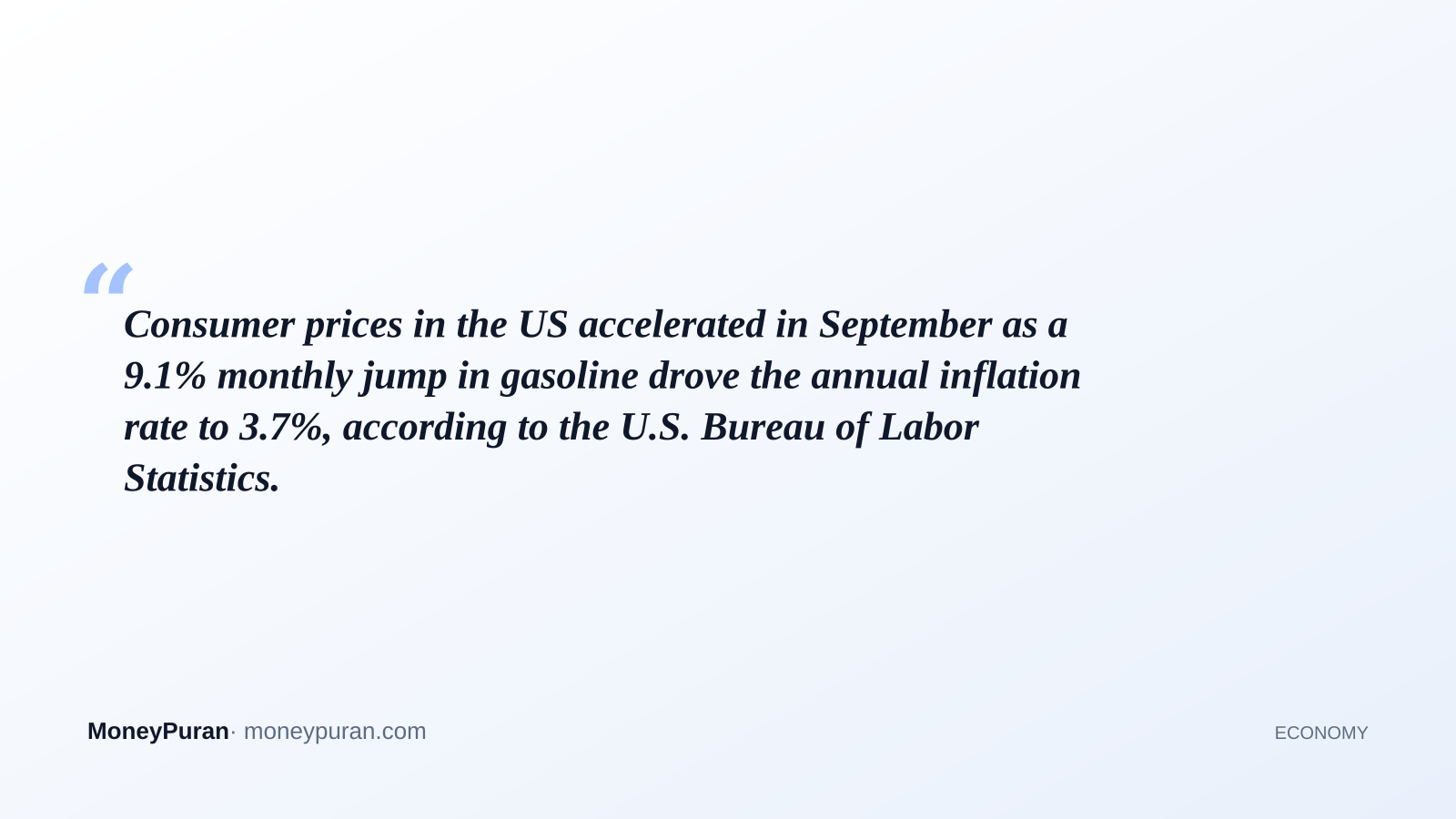
Consumer prices in the US accelerated in September as a 9.1% monthly jump in gasoline drove the annual inflation rate to 3.7%, according to the U.S. Bureau of Labor Statistics.
Key points
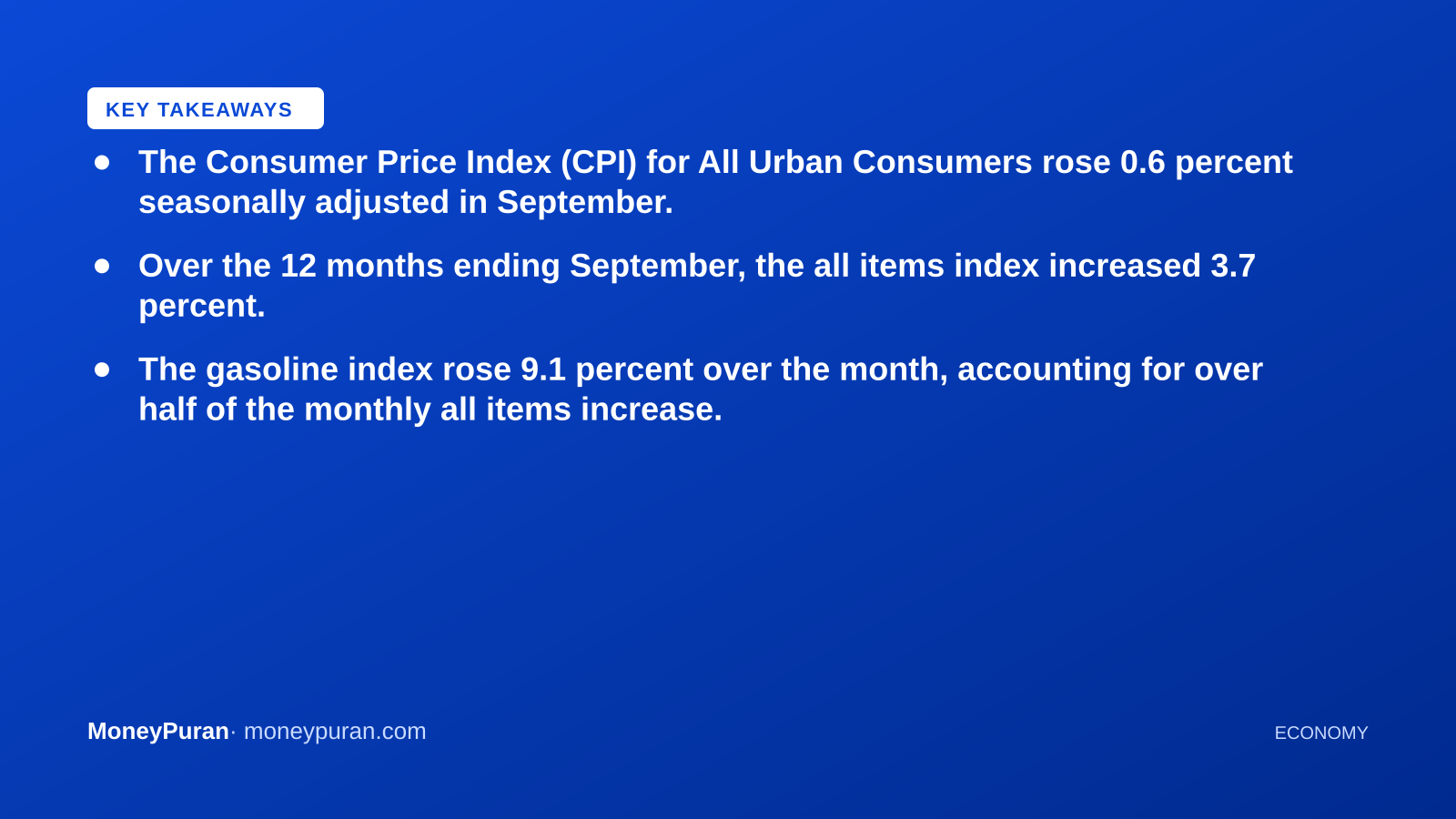
- The Consumer Price Index (CPI) for All Urban Consumers rose 0.6 percent seasonally adjusted in September.
- Over the 12 months ending September, the all items index increased 3.7 percent.
- The gasoline index rose 9.1 percent over the month, accounting for over half of the monthly all items increase.
- The index for all items less food and energy rose 0.3 percent in September, up 2.6 percent over the year.
US consumer price inflation picked up pace in September, driven primarily by a sharp surge in energy costs, according to data released by the U.S. Bureau of Labor Statistics. The Consumer Price Index for All Urban Consumers (CPI-U) climbed 0.6 percent on a seasonally adjusted basis during the month, following a 0.4 percent increase in August. Over the 12-month period ending in September, the headline inflation rate rose to 3.7 percent, up from 3.4 percent in August.
The primary driver behind the acceleration was the energy sector, which jumped 5.2 percent over the month. Specifically, the gasoline index surged 9.1 percent in September, accounting for more than half of the total monthly increase in the all-items index. On an annual basis, the energy index recorded a substantial 20.4 percent increase, led heavily by a 34.2 percent yearly spike in gasoline prices. Meanwhile, electricity saw a modest monthly rise of 0.2 percent, while natural gas dipped 0.3 percent.
Core Inflation Remains Steadier
Excluding the volatile food and energy categories, core consumer prices demonstrated a more stable trajectory. The index for all items less food and energy rose 0.3 percent in September, matching the pace set in August. Over the past 12 months, the core inflation index advanced 2.6 percent, compared to a 2.4 percent annual rate recorded the previous month.
Shelter costs continued to exert upward pressure on the core index, rising 0.4 percent over the month and 3.2 percent over the year. Other notable monthly increases within the core basket included airline fares, which climbed 1.2 percent, used cars and trucks up 0.7 percent, and recreation rising 0.5 percent. Conversely, prescription drugs saw a notable decline of 1.2 percent, helping to temper overall medical care increases.
Food Prices Show Mixed Movements
The overall food index remained unchanged in September after posting modest 0.1 percent gains in each of the preceding two months. The food at home index edged down 0.1 percent, weighed down by a 1.0 percent drop in beef prices and a 2.0 percent decline in milk prices. However, certain grocery categories moved higher, including nonalcoholic beverages, which jumped 0.9 percent due to a 1.5 percent increase in carbonated drinks. Dining out also became slightly more expensive, with the food away from home index rising 0.2 percent over the month.
What this means for investors
Inflation prints like the September CPI release serve as a critical gauge for central bank monetary policy decisions and broader economic health. When headline inflation accelerates due to commodity spikes such as gasoline, it complicates the outlook for interest rates, bond yields, and currency valuations. For global investors tracking US markets, higher-than-expected inflation data often sparks volatility across equities and fixed income as market participants reprice expectations for Federal Reserve actions.
Indian investors and market participants monitor US inflation trends closely due to their direct read-through to global liquidity, foreign institutional investor (FII) capital flows, and currency stability. Persistently higher US price pressures can influence global bond yields, impacting foreign portfolio allocations in emerging markets like India and affecting the movement of the rupee against the US dollar. Keeping an eye on energy markets and upcoming central bank commentary provides essential context for navigating these cross-border financial currents.
Frequently asked questions
What is the Consumer Price Index? The CPI is a statistical measure that tracks the average change over time in the prices paid by urban consumers for a representative basket of consumer goods and services.
How does seasonal adjustment affect the data? Seasonal adjustment removes the estimated effects of regular, predictable seasonal patterns—such as weather changes or holiday shopping spikes—allowing analysts to better view underlying economic trends.
This article is for information only and is not investment advice. Do your own research or consult a licensed adviser before investing.
Based on information published by U.S. Bureau of Labor Statistics (BLS). Source: U.S. Bureau of Labor Statistics (BLS). Spotted an error? corrections@moneypuran.com