 Money
Money
A clear, comprehensive guide to understanding grey market premiums, how expected listing prices are calculated, and why this informal metric behaves differently across global markets.
Key points
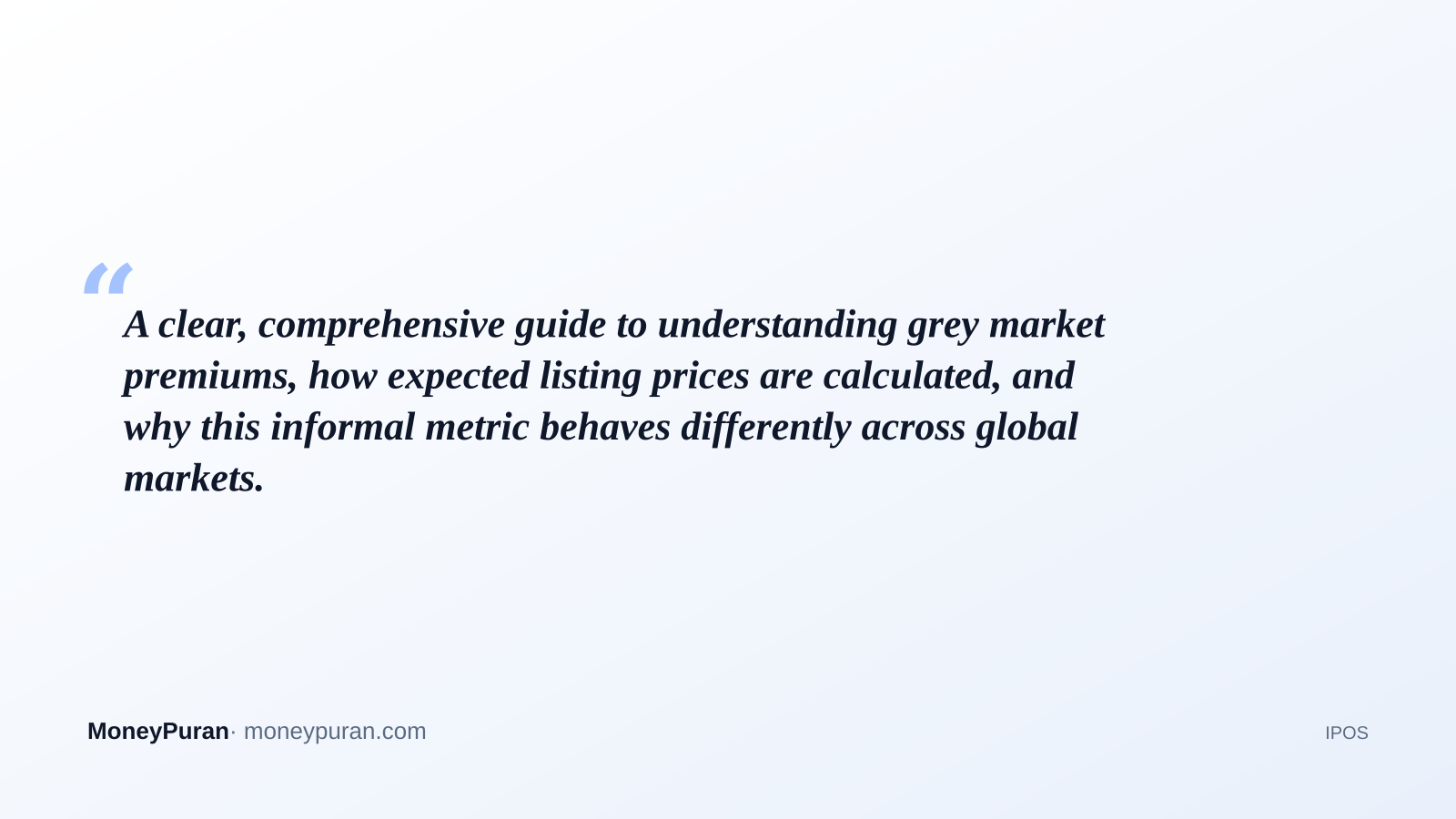
- GMP stands for Grey Market Premium, reflecting the unofficial price of an IPO share before exchange listing.
- The expected listing price is generally calculated by adding the GMP to the final issue price or cap price.
- Grey market trading is completely unregulated, highly volatile, and carries substantial financial risk.
- While prevalent as a retail sentiment gauge in countries like India, pre-IPO grey market trading is largely absent or prohibited in the United States.
When a private company prepares to go public, retail investors look for various signals to gauge whether the stock will rise or fall upon its market debut. Among the most closely watched yet misunderstood metrics in certain international markets is the grey market premium. Understanding ipo gmp meaning is essential for anyone trying to decode pre-listing hype and retail sentiment.
In simple terms, the grey market premium represents the unofficial price at which an initial public offering’s shares trade in an unregulated, informal market before they officially debut on a recognized stock exchange like the NSE or BSE. It is not an official financial figure sanctioned by regulators, but rather a reflection of supply, demand, and speculative appetite among off-exchange participants.
How the Grey Market Premium Works
The mechanics of the grey market operate entirely outside the official banking and exchange infrastructure. Traders and high-net-worth individuals buy and sell IPO application forms or unlisted allotment promises through informal networks well before the stock actually lists.
Market watchers use a straightforward formula to estimate the potential debut price based on this unofficial metric:
Expected Listing Price = Final Issue Price (or Cap Price) + GMP
For example, if an upcoming company sets its final issue price at $100 or ₹500, and the current premium is reported at $20 or ₹100, the informal market is pricing a potential debut at $120 or ₹600. To track upcoming public offerings where these discussions frequently happen, investors often monitor the India IPO calendar 2026 for scheduled listings.
The Risks of Relying on Unregulated Signals
While a high premium generates excitement, relying on unofficial figures is hazardous. Because the grey market lacks any regulatory oversight, reported numbers can be easily manipulated by syndicates or pessimistic rumors.
Furthermore, a strong premium does not guarantee a profitable listing day. Macroeconomic shifts, sudden market downturns, or weak institutional buying can cause a heavily hyped stock to list below its issue price, wiping out expected gains instantly.
US Versus India Regulatory Frameworks
The visibility and cultural footprint of grey market metrics vary dramatically by region. In India, retail investor participation in tracking unofficial premiums is widespread, serving as a popular informal barometer of market enthusiasm.
Conversely, in the United States, strict regulatory frameworks overseen by bodies like the Securities and Exchange Commission (SEC) prohibit the informal, unregulated pre-market trading of unlisted retail IPO shares. Institutional investors in the US utilize restricted channels like the grey market or when-issued trading only under strict compliance, making retail tracking of informal premiums virtually non-existent.
Frequently asked questions
Is the grey market legal? The grey market operates in a legal grey area. It is generally not recognized or protected by securities regulators, meaning participants have no formal legal recourse if a counterparty defaults on a trade.
Does a high premium guarantee a profit? No. The premium is merely a sentiment indicator based on current demand. Market conditions on the actual listing day can cause shares to plummet below the issue price.
Where can I find official IPO data? Official pricing, prospectus filings, and allotment statuses are published exclusively on regulatory portals such as sebi.gov.in or directly through official exchange websites.
This article is for general education and is not investment, tax or financial advice. Rules and figures change — check the official source or a licensed adviser before acting.
Official information: https://www.sebi.gov.in
This explainer is published by the MoneyPuran desk for general awareness. Rules, limits and rates change over time — please confirm with the official source. Corrections: corrections@moneypuran.com