 Money
Money
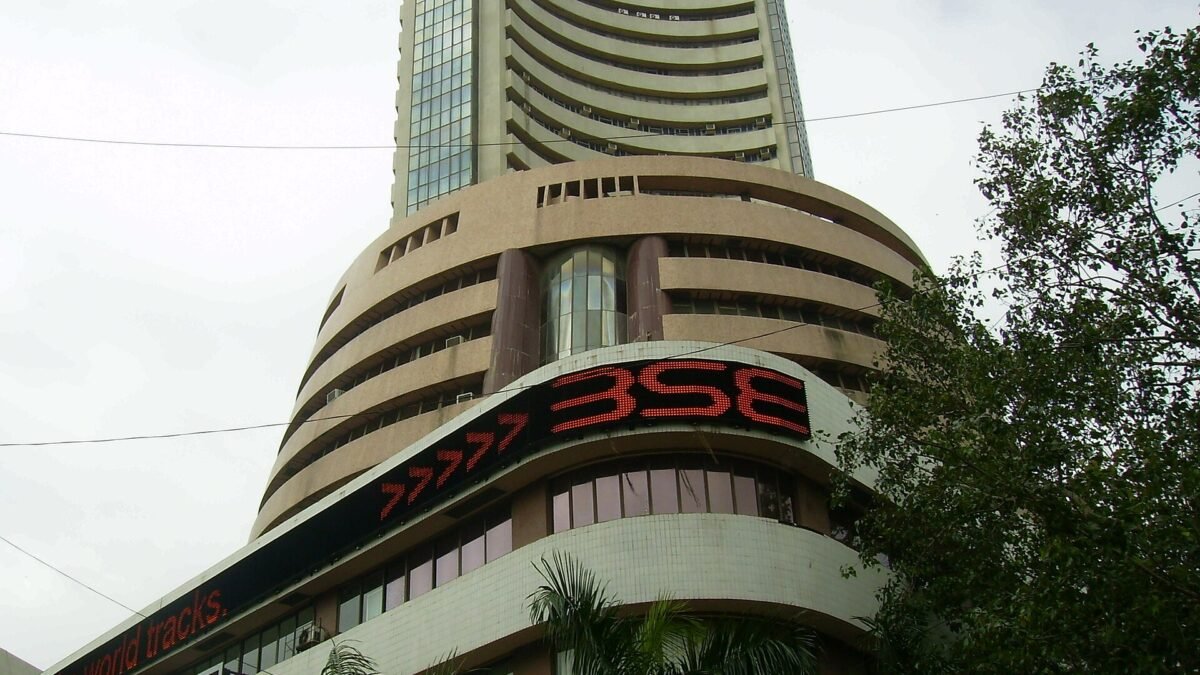
A comprehensive guide to India’s oldest stock market index, its 30 blue-chip constituents, calculation methodology, and how it compares to US market benchmarks.
Key points
- The S&P BSE Sensex is India’s premier equity index, tracking 30 large, liquid blue-chip companies listed on the Bombay Stock Exchange.
- It uses a free-float market-capitalization weighting methodology, with a base year of 1978–79 and a base value of 100.
- Index constituents are selected based on liquidity, market capitalization, listing history, and broad sector representation.
- While similar in size to the US Dow Jones Industrial Average (30 stocks), the Sensex is market-cap weighted rather than price-weighted.
If you are new to investing in Indian equities, understanding what is the sensex is the first step toward tracking the country’s economic pulse. The S&P BSE Sensex, short for the Sensitive Index, is the flagship stock market index of the Bombay Stock Exchange (BSE). Established as India’s oldest stock index, it tracks thirty of the largest, most financially sound, and liquid companies listed on the exchange. It serves as a primary barometer for the health of India’s corporate sector and broader macro economy.
What is the Sensex and how does it measure the market?
To fully grasp what is the sensex, one must look at its origins and methodology. Launched in 1986 by the Bombay Stock Exchange, the index established its base period as the financial year 1978–79 with a base value set at 100 points. Over the decades, it has grown from that modest 100-point baseline to tens of thousands of points, reflecting the long-term expansion of Indian commerce.
The index uses a free-float market capitalization methodology. Rather than counting all shares issued by a company, free-float reflects only those shares available for public trading, excluding promoter holdings, government stakes, and locked-in strategic investments. This ensures that a company’s influence on the index accurately reflects its active market liquidity.
Which companies are included in the Sensex?
While the BSE lists thousands of public companies, the Sensex focuses exclusively on 30 industry leaders. When beginners ask what is the sensex composed of, they find a diverse mix of blue-chip enterprises spanning key sectors of the Indian economy.
To be eligible for inclusion in the Sensex, a company must satisfy several strict criteria set by the index committee:
- Listing track record: The stock must be listed on the Bombay Stock Exchange with an established trading history.
- Market capitalization: The company must rank among the top tier of firms by free-float market capitalization.
- Trading liquidity: Shares must trade on almost every business day with high volume and narrow bid-ask spreads.
- Sector representation: The company should reflect its industry, helping the overall index mirror the broader Indian economic landscape.
- Financial health: The business must demonstrate solid corporate governance and consistent financial performance.
Major sectors represented in the index include banking and financial services, information technology, consumer goods, oil and gas, pharmaceuticals, and infrastructure. Industry giants such as Reliance Industries, Tata Consultancy Services (TCS), HDFC Bank, ICICI Bank, and Infosys are traditional heavyweights that significantly influence its daily movements.
How the calculation formula works
Understanding the underlying mechanics further clarifies what is the sensex and how daily price movements occur. The value of the Sensex at any given second is calculated using a straightforward sequence:
First, the free-float market capitalization of each of the 30 constituent companies is calculated by multiplying its total shares available to the public by its current market price. Second, these 30 individual values are added together to determine the total aggregate free-float market capitalization of the index. Finally, this aggregate value is divided by an index divisor (linked to the base market capitalization established in 1978–79) and multiplied by the base index value of 100.
Because it is market-cap weighted, larger companies carry a higher percentage weight in the index. Consequently, significant price shifts in top constituents like HDFC Bank or Reliance Industries move the index value more than equivalent percentage moves in smaller constituents.
Comparing Indian and US stock benchmarks
For international investors or US residents exploring emerging markets, comparing Indian and American indices offers valuable context. When examining what is the sensex relative to US market benchmarks, several key distinctions emerge.
The Sensex is often compared to the Dow Jones Industrial Average (DJIA) in the United States because both track a small group of premier blue-chip companies—30 in each case. However, their calculation methodologies differ significantly. The Dow Jones is a price-weighted index, meaning higher stock prices grant greater influence regardless of total company size. In contrast, the Sensex uses free-float market-cap weighting, similar to the US S&P 500 index.
Regulatory oversight also differs across jurisdictions:
- India: Equities and market indices fall under the regulatory purview of the Securities and Exchange Board of India (SEBI), with banking and currency policy managed by the Reserve Bank of India (RBI).
- United States: Equity markets are regulated by the Securities and Exchange Commission (SEC), with monetary policy overseen by the Federal Reserve.
US-based investors seeking exposure to Sensex companies can explore American Depositary Receipts (ADRs) traded on US exchanges or foreign-focused exchange-traded funds (ETFs) that track Indian equities.
Why tracking what is the sensex matters for investors
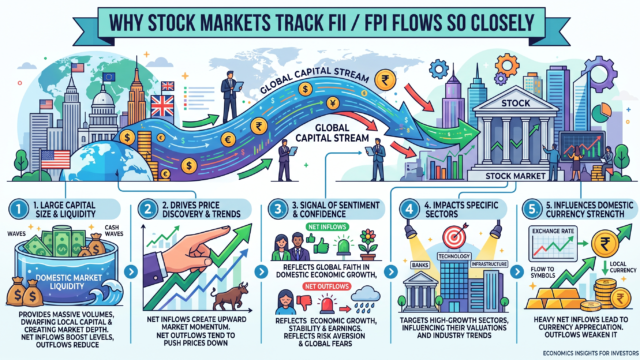
Whether you reside in Mumbai or New York, monitoring what is the sensex provides critical economic insights. As India continues its trajectory as one of the world’s fastest-growing major economies, the Sensex serves as a real-time sentiment gauge for foreign portfolio investors (FPIs) and domestic institutional investors (DIIs).
Tracking the index helps investors evaluate overall market valuation levels through price-to-earnings (P/E) ratios, dividend yields, and sector rotation patterns. When global economic conditions shift, watching how the Sensex responds provides valuable cues regarding risk appetite in emerging markets.
Frequently asked questions
What is the difference between Sensex and Nifty 50? The Sensex tracks 30 major companies listed on the Bombay Stock Exchange (BSE), while the Nifty 50 tracks 50 large companies listed on the National Stock Exchange (NSE). Both are free-float market-cap weighted benchmark indices for the Indian equity market.
Can I buy shares of the Sensex directly? No, you cannot buy an index directly because it is a mathematical calculation. However, you can invest in Sensex index funds or Exchange-Traded Funds (ETFs) that replicate the performance and stock weighting of the Sensex.
How often are companies in the Sensex updated? The index constituents are reviewed semi-annually by the index governing committee. Companies that no longer meet liquidity, market cap, or representation standards are replaced by eligible candidates.
Is the Sensex suitable for long-term investing? Broad market indices like the Sensex historically reflect long-term national economic growth. However, equity investments involve market risk, and historical performance does not guarantee future results.
This article is for general education and is not investment, tax or financial advice. Rules and figures change — check the official source or a licensed adviser before acting.
This explainer is published by the MoneyPuran desk for general awareness. Rules, limits and rates change over time — please confirm with the official source. Corrections: corrections@moneypuran.com

[…] What Is the Sensex and Which Companies Are Included? […]