 Money
Money
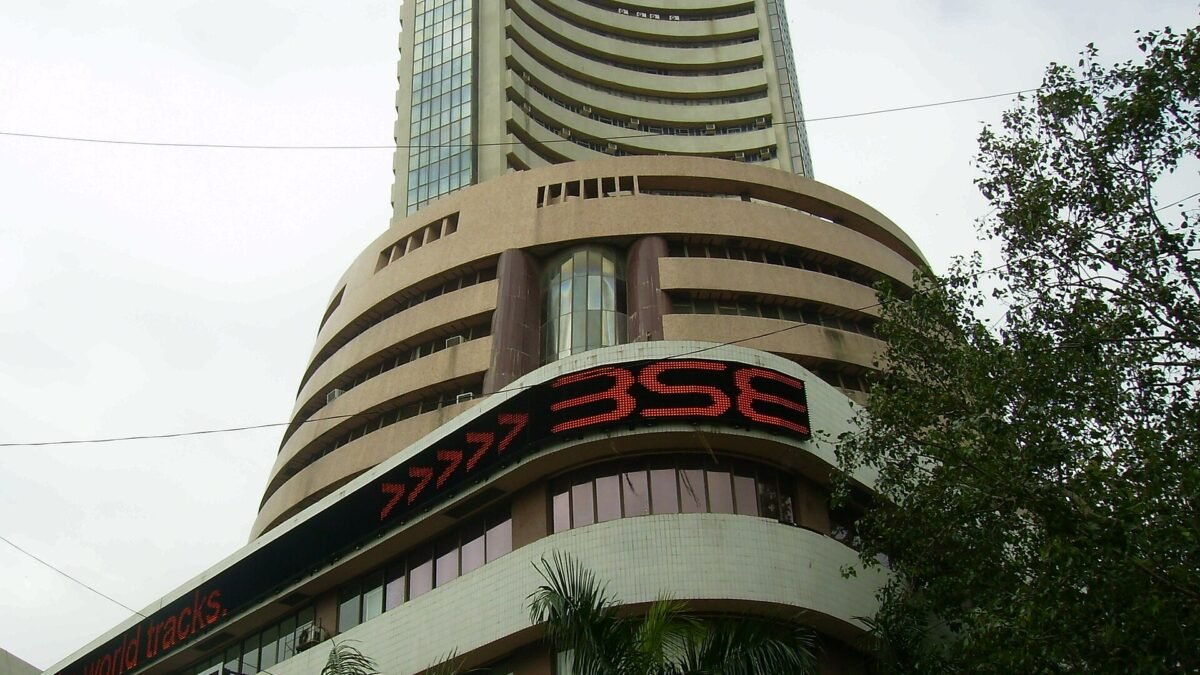
Indian benchmark equity indices closed lower on September 7, 2026, with the Sensex dropping 1.05% and Nifty 50 declining 1.15%.
Key points
- BSE Sensex dropped 1.05% (811.47 points) to close at 76,132.81 on September 7, 2026.
- NSE Nifty 50 fell 1.15% (276.65 points) to settle at 23,779.15.
- Nifty Bank slipped 0.56% to finish at 57,088.30.
- USD/INR exchange rate fell 0.66% to 94.49 from 95.11 in the previous session.
The Sensex today experienced significant downward pressure as key Indian equity benchmarks closed lower on September 7, 2026. The 30-share BSE Sensex dropped by more than 1 percent to settle at 76,132.81, while the broader Nifty 50 index slipped below the crucial 23,800 threshold. Market breadth remained weak across major sectors, reflecting broader caution among domestic and international investors.
Sensex today and Nifty 50 performance details
During the trading session on September 7, 2026, the BSE Sensex opened weak and touched an intraday low of 75,970.52 before recovering slightly to finish at 76,132.81, representing a decline of 811.47 points or 1.05 percent from its previous closing level of 76,944.28. The index recorded an intraday high of 76,477.19 prior to succumbing to afternoon selling pressure. Analyzing the Sensex today provides investors with insights into overall equity market momentum.
Similarly, the National Stock Exchange (NSE) Nifty 50 index witnessed a sharp contraction of 276.65 points or 1.15 percent, closing at 23,779.15 compared to its prior close of 24,055.80. Throughout the day, the Nifty 50 oscillated within a range of 23,737.90 to 23,890.00. Banking equities also saw losses, with the Nifty Bank index shedding 321.30 points or 0.56 percent to end at 57,088.30 after trading between 57,002.95 and 57,426.85.
Key market metrics for September 7, 2026
The following list outlines the key benchmark index levels and currency movements observed at the end of the trading day:
- BSE Sensex: Closed at 76,132.81, down 1.05% (previous close: 76,944.28; day range: 75,970.52–76,477.19).
- NSE Nifty 50: Closed at 23,779.15, down 1.15% (previous close: 24,055.80; day range: 23,737.90–23,890.00).
- Nifty Bank: Closed at 57,088.30, down 0.56% (previous close: 57,409.60; day range: 57,002.95–57,426.85).
- USD/INR Exchange Rate: Settled at 94.49, down 0.66% (previous close: 95.11; day range: 94.36–94.49).
Understanding the context behind the Sensex today trends
Equity market benchmark indices such as the BSE Sensex and NSE Nifty 50 serve as key indicators of economic health and corporate valuation in India. The Sensex tracks thirty established, financially sound companies listed on the Bombay Stock Exchange, spanning multiple core sectors including financial services, information technology, consumer goods, energy, and heavy manufacturing.
When monitoring movements in the Sensex today, market participants pay close attention to broad macroeconomic variables, corporate earnings performance, and international capital flows. Foreign institutional investors (FIIs) and domestic institutional investors (DIIs) represent two primary pillars driving daily trading volumes in the Indian market. Shifts in global risk sentiment, interest rate expectations, commodity prices, and currency movements frequently influence institutional portfolio allocation decisions between emerging markets and developed asset classes.
Institutional flows often dictate the short-term trajectory of benchmark equity indices. When foreign investors adjust their emerging market exposure due to shifting yield spreads or global macroeconomic uncertainties, benchmark indices can experience heightened volatility. Conversely, strong inflows from domestic mutual funds through systematic investment plans have provided structural liquidity support to Indian stock markets over recent years.
Currency movements and macroeconomic considerations
Alongside equity price adjustments, the Indian rupee strengthened against the United States dollar on September 7, 2026. The USD/INR pair ended at 94.49, representing a 0.66 percent decrease from the previous closing level of 95.11. The currency pair fluctuated between 94.36 and 94.49 during the session, reflecting modest rupee appreciation on the day.
Currency exchange fluctuations play a vital role in influencing stock market dynamics in emerging market economies like India. A stronger domestic currency generally lowers import bills for essential commodities such as crude oil, electronics, and industrial raw materials. Lower import costs can help moderate input price pressures for domestic manufacturers and support broader corporate profit margins.
However, currency appreciation can simultaneously exert margin pressure on export-oriented sectors, such as information technology services and pharmaceuticals, whose revenues are largely denominated in foreign currencies like the US dollar. Analysts observe that currency stability often helps anchor broader financial market stability during periods of volatility in global asset markets, giving international investors greater confidence in holding local-currency assets.
What investors should know about market cycles
Daily fluctuations in major stock indices are a standard component of equity market ownership. Short-term corrections like the movement seen in the Sensex today reflect ongoing price discovery, changing liquidity conditions, and periodic profit-taking by short-term traders. Market participants often evaluate benchmark movements in conjunction with longer-term valuation multiples, corporate earnings growth trajectories, and broader macroeconomic indicators.
For long-term investors, market volatility highlights the importance of maintaining a well-diversified investment portfolio across various asset classes and industrial sectors. Strategic asset allocation and regular portfolio review assist investors in managing risk exposure during periods when equity indices undergo short-term declines. Financial advisors frequently emphasize sticking to disciplined investment strategies rather than reacting to short-term intraday volatility.
Frequently asked questions
What was the closing level of the Sensex today? The BSE Sensex closed at 76,132.81 on September 7, 2026, marking a decrease of 1.05 percent from its previous close of 76,944.28.
How did the Nifty 50 perform during the session? The NSE Nifty 50 fell 1.15 percent to end the session at 23,779.15, down from 24,055.80 at the prior close, trading within a range of 23,737.90 to 23,890.00.
How did the rupee trade against the US dollar? The USD/INR exchange rate closed at 94.49, down 0.66 percent from 95.11 in the previous session, moving between 94.36 and 94.49 during intraday trade.
This article is for information only and is not investment advice. Do your own research or consult a licensed adviser before investing.
Based on information published by MoneyPuran market data. Source: MoneyPuran market data. Spotted an error? corrections@moneypuran.com