 Money
Money
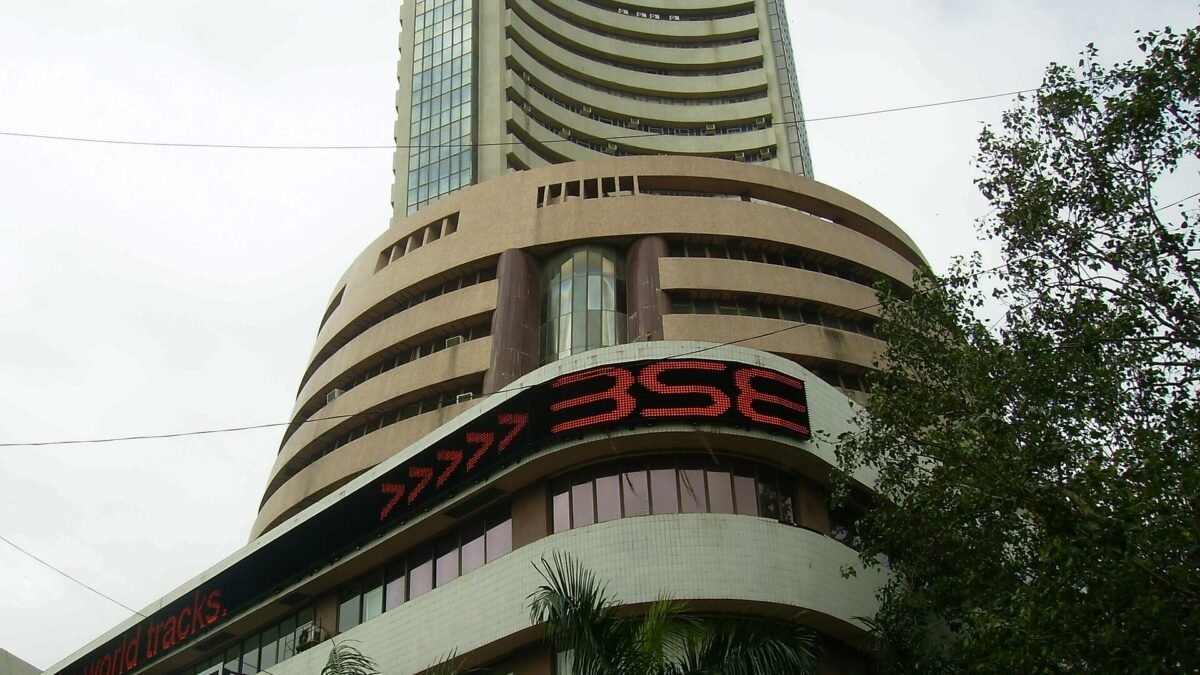
An in-depth guide to India’s premier stock market benchmark, its calculation methodology, and how global investors track it.
Key points
- The Nifty 50 is the flagship index of the National Stock Exchange of India (NSE), tracking 50 major blue-chip companies across key sectors.
- It uses a free-float market capitalization weighting methodology with a base year of 1995 and a base value of 1,000.
- NSE Indices Limited rebalances the index semi-annually in March and September using strict liquidity and market-cap filters.
- Investors can gain exposure to the index using passive index funds, exchange-traded funds (ETFs), or derivative contracts.
If you are exploring the Indian stock market, understanding what is nifty 50 is essential for gauging the financial health of the economy. The Nifty 50 is the flagship benchmark index of the National Stock Exchange of India (NSE), tracking the performance of 50 of the largest and most liquid Indian companies listed across various sectors. Maintained by NSE Indices Limited, it serves as an economic barometer for the broader Indian equity market.
Understanding What Is Nifty 50 and Its History
The index was launched in 1996 by India’s National Stock Exchange with a base period starting on November 3, 1995, and a base value set at 1,000. It represents a substantial percentage of the total free-float market capitalization of all equities listed on the exchange. Because its constituents span major sectors—including banking, financial services, information technology, consumer goods, energy, and pharmaceuticals—it offers a comprehensive picture of domestic macroeconomic trends.
When new investors ask what is nifty 50, they are looking at a curated basket of market leaders. These 50 blue-chip firms are selected based on strict market capitalization and liquidity criteria, ensuring that the benchmark reflects institutional-grade stability and active public trading.
How Is the Nifty 50 Index Calculated?
The Nifty 50 uses the free-float market capitalization weighting methodology. Unlike a full market capitalization system, which counts all shares issued by a company, free-float calculation only considers shares readily available for public trading. It deliberately excludes promoter holdings, government stakes, strategic cross-holdings, and locked-in employee shares.
The value of the index reflects the aggregate free-float market value of its 50 constituent companies relative to the base period value established in 1995. The standard calculation process involves four main steps:
- Calculate Full Market Capitalization: Multiply the total outstanding shares of each company by its current prevailing market price.
- Determine the Investable Weight Factor (IWF): Identify the proportion of total shares accessible to public investors versus locked-in holdings.
- Calculate Free-Float Market Cap: Multiply the company’s full market capitalization by its Investable Weight Factor.
- Apply the Index Formula: Sum the free-float market cap of all 50 stocks, divide this figure by the base market capitalization, and multiply by the base index value of 1,000.
Selection Criteria: What Is Nifty 50 Inclusion Based On?
To maintain structural integrity and reflect market realities, NSE Indices Limited evaluates the index semi-annually in March and September. A semi-annual reconstitution ensures that underperforming or illiquid companies are replaced by rising corporate leaders.
To qualify for selection, a company must fulfill several key eligibility requirements:
- Liquidity: The stock must trade at an average impact cost of 0.50% or less over the previous six months for 90% of observations.
- Free-Float Market Cap: The firm’s public market value must be significantly larger than non-constituent companies competing for inclusion.
- Listing History: The company must be domiciled in India and listed on the NSE for at least six months (with shorter timeframes permitted for major initial public offerings).
- Trading Frequency: The equity must have traded on 100% of available trading days over the six-month evaluation period.
- Derivative Segment Eligibility: Companies eligible for trading in the Futures and Options (F&O) segment receive priority for inclusion.
Nifty 50 vs US Markets: Key Differences
For international investors comparing Indian equities to American benchmarks, comparing the Nifty 50 to indices like the S&P 500 or the Dow Jones Industrial Average clarifies their key structural differences. While the S&P 500 tracks 500 large-cap US companies across a multi-trillion-dollar market, the Nifty 50 focuses concentrated exposure on the top 50 mega-cap enterprises driving India’s expanding economy.
Both the S&P 500 and the Nifty 50 employ free-float market cap weighting, ensuring that large, publicly traded companies exert proportional influence on index movements. However, foreign investors accessing Nifty 50 assets face specific regulatory and tax frameworks. Non-resident individuals and international institutions typically trade Indian equities via India-focused Exchange-Traded Funds (ETFs) listed on international exchanges, American Depositary Receipts (ADRs), or through registered Foreign Portfolio Investor (FPI) channels regulated by the Securities and Exchange Board of India (SEBI).
How Investors Use the Nifty 50
Understanding what is nifty 50 helps clarify its practical role in modern portfolio management. Institutional asset managers use the index as a primary performance benchmark for actively managed equity mutual funds. If an active fund fails to beat the returns of the index over long horizons, investors may opt for passive alternatives.
For passive investors, low-cost Nifty 50 index funds and ETFs mirror the exact holdings and weights of the index. This approach allows market participants to capture broad market gains without attempting to pick individual winning stocks. Additionally, the index forms the foundation for high-volume derivative contracts, allowing traders and institutional hedgers to manage systematic risk efficiently.
To summarize what is nifty 50 for long-term investors: it is a transparent, dynamically updated portfolio of India’s largest corporate enterprises, offering a clear reflection of the nation’s economic output.
Frequently asked questions
How often are companies added or removed from the Nifty 50? The index is formally reviewed twice a year, in March and September. Reconstitution announcements are made six weeks in advance before changes take effect.
What is the difference between Nifty 50 and BSE Sensex? The Nifty 50 comprises 50 large companies listed on the National Stock Exchange (NSE), whereas the Sensex tracks 30 major companies listed on the Bombay Stock Exchange (BSE). Both indices measure large-cap Indian corporate performance using free-float market cap weighting.
Can international investors buy Nifty 50 index funds directly? Global investors can invest through country-specific exchange-traded funds (ETFs) traded on US or European exchanges, or register via approved Foreign Portfolio Investor (FPI) pathways under SEBI guidelines.
This article is for general education and is not investment, tax or financial advice. Rules and figures change — check the official source or a licensed adviser before acting.
This explainer is published by the MoneyPuran desk for general awareness. Rules, limits and rates change over time — please confirm with the official source. Corrections: corrections@moneypuran.com



[…] What Is Nifty 50 and How Is the Index Calculated? […]