 Money
Money
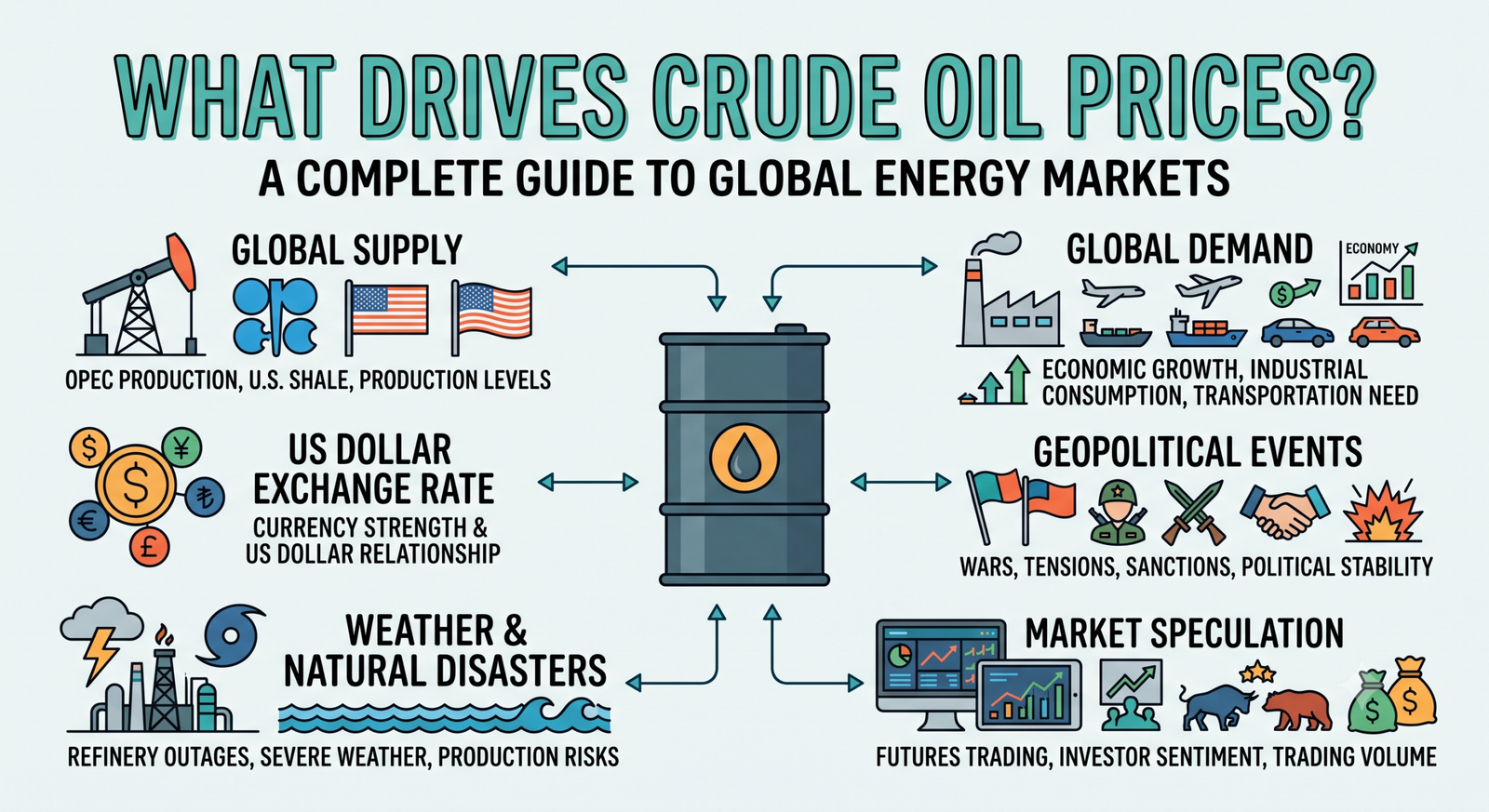
A comprehensive breakdown of how global supply, consumer demand, geopolitical events, and economic benchmarks shape world energy prices.
Key points
- Crude oil prices are primarily determined by global supply, economic demand, inventory levels, currency values, and geopolitical risks.
- OPEC+ decisions and US shale production represent the major supply-side forces influencing global benchmarks like Brent and WTI.
- Because international crude is priced in US Dollars, fluctuations in currency strength directly affect purchasing power for foreign buyers.
- Rising crude oil prices impact economies differently: net producers benefit from revenues, while net importers like India face severe inflation and trade deficits.
Understanding what moves crude oil prices is essential for investors, consumers, and policymakers alike. Crude oil is the world’s most heavily traded physical commodity, serving as the primary feedstock for transportation fuels, heating, petrochemicals, and thousands of industrial materials. Because energy costs permeate almost every sector of the global economy, shifts in oil benchmarks directly ripple through stock markets, bond yields, and headline inflation numbers.
Primary factors that influence crude oil prices
At its core, the energy market operates on fundamental economic principles of supply and demand, heavily influenced by geopolitical events and currency fluctuations. However, unlike standard consumer goods, oil production cannot always be increased or decreased instantly, making energy markets uniquely volatile.
Key market drivers include:
- Global supply decisions: Output limits or increases by major oil-producing cartels and independent producers.
- Economic demand indicators: Industrial manufacturing activity, passenger travel, and commercial logistics in major economies.
- Geopolitical risk premiums: Tensions, sanctions, or conflict near vital oil reserves and transit chokepoints.
- US Dollar exchange rates: Changes in USD purchasing power, as energy contracts worldwide are denominated in greenbacks.
- Inventory stockpiles: Weekly commercial crude storage data tracked by government energy agencies.
Supply dynamics: OPEC+, shale, and market disruptions
Supply availability heavily dictates benchmark rates like West Texas Intermediate (WTI) in the United States and Brent Crude internationally. The Organization of the Petroleum Exporting Countries along with allied producers (known as OPEC+) controls a vast share of global production capacity. When OPEC+ agrees to limit output, tighter supply typically pushes crude oil prices higher. Conversely, when member nations increase production quotas, market oversupply can cause rates to soften quickly.
In recent years, non-OPEC production—most notably US shale oil—has served as a vital swing producer. American shale operators can bring new wells online relatively quickly compared to deepwater offshore projects. Additionally, unplanned outages caused by severe weather in energy hubs, pipeline malfunctions, or political unrest temporarily remove physical crude from the market, placing swift upward pressure on market prices.
Demand drivers and inventory reports
On the demand side, macroeconomic growth in major consuming nations like China, the United States, and India heavily sways crude oil prices. During economic expansions, rising industrial production, freight activity, and consumer travel heighten fuel consumption. During recessions or broader market slowdowns, fuel consumption drops, leading to excess supply accumulation.
Traders actively analyze weekly inventory reports to gauge short-term supply-demand balances. In the US, the Energy Information Administration (EIA) publishes inventory data detailing commercial crude reserves, gasoline stocks, and distillate levels. An unexpected drawdown in inventories signals robust consumer demand, often sparking short-term rallies in crude oil prices. Conversely, large inventory builds indicate sluggish demand or excess production, which tends to weigh on benchmark valuations.
Currency movements and geopolitical risks
Because international crude oil contracts are standardly quoted and settled in US Dollars (USD), currency movements exert a direct structural force on commodity pricing. When the US Dollar depreciates against foreign currencies, holding crude becomes comparatively less expensive for foreign buyers using local currencies, boosting demand. A stronger US Dollar renders oil more expensive globally, dampening international purchasing volume.
Geopolitical stability remains another dominant variable. Energy-producing regions across the Middle East, Eastern Europe, and South America can face political turmoil or maritime transport disruptions in key transit channels like the Strait of Hormuz or the Red Sea. When supply security is threatened, market participants build a risk premium into futures contracts, driving rapid price surges even before physical disruptions occur.
How crude oil prices impact the US vs India
The domestic macroeconomic effect of changing crude oil prices depends heavily on whether a nation is a net exporter or a net importer of energy.
- United States: The US is both the world’s largest crude oil producer and a major consumer. High energy prices benefit domestic energy company revenues and state tax bases in oil-producing regions. However, elevated fuel prices reduce disposable household income and increase shipping expenses, adding persistent inflationary pressure across retail supply chains.
- India: India imports over 85% of its crude oil requirements to sustain national fuel needs. Consequently, rising crude oil prices significantly expand India’s national import bill, expanding its current account deficit and placing depreciation pressure on the Indian Rupee (INR). Elevated energy costs trickle down rapidly into transportation, power, and agriculture, pushing up consumer inflation.
Frequently asked questions
What is the difference between WTI and Brent crude? West Texas Intermediate (WTI) is the primary benchmark for light, sweet crude produced in North America, while Brent Crude serves as the international benchmark derived mainly from North Sea fields. Brent prices govern a large majority of global physical oil trading.
Why do crude oil prices directly affect retail gasoline costs? Crude oil represents the single largest input cost in refined petroleum products, often making up over half of the price consumers pay at retail gas stations. The remainder consists of refining processes, transportation logistics, distribution, and government taxes.
How can individual investors track or invest in oil markets? Investors often track oil markets through broad commodity exchange-traded funds (ETFs), individual energy sector stocks, mutual funds, or energy futures. Because direct commodity trading carries elevated risk, investors typically review asset allocation options with a licensed financial adviser.
This article is for general education and is not investment, tax or financial advice. Rules and figures change — check the official source or a licensed adviser before acting.
Official information: https://www.investor.gov
This explainer is published by the MoneyPuran desk for general awareness. Rules, limits and rates change over time — please confirm with the official source. Corrections: corrections@moneypuran.com