 Money
Money
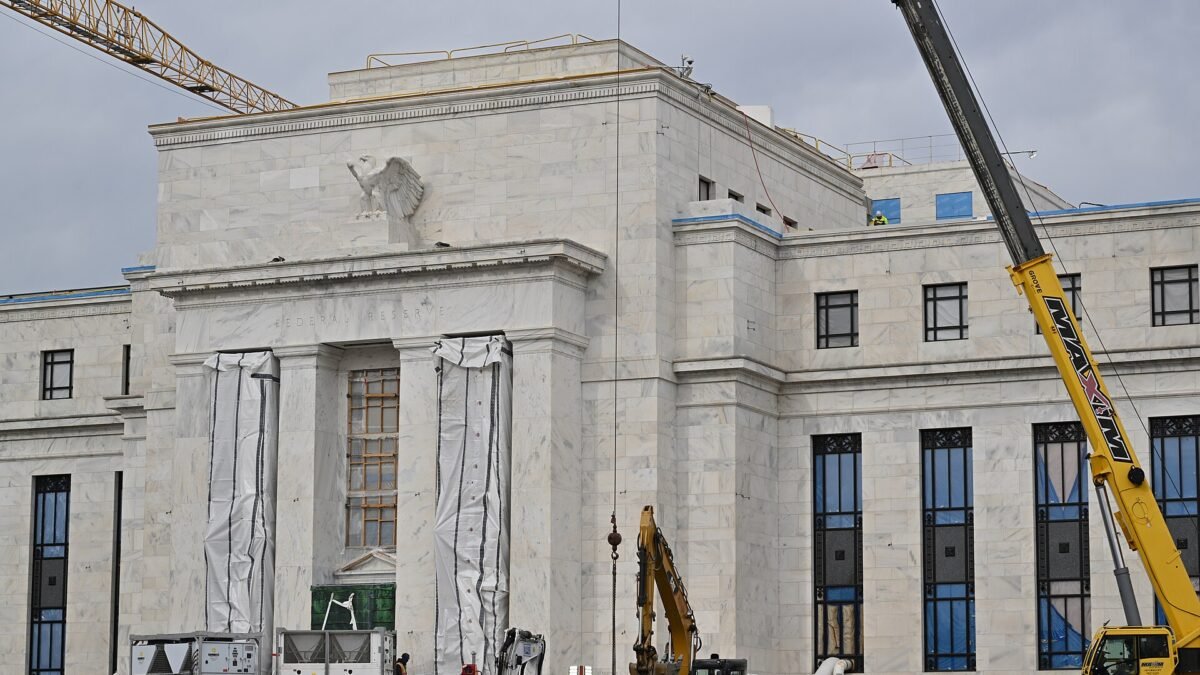
The Federal Reserve has established five external task forces led by prominent economists and industry leaders to review monetary policy tools, data, and frameworks.
Key points
- The Federal Reserve announced five task forces on July 9, 2026, to advance monetary policy.
- Chairman Kevin Warsh stated the initiative aims to assess whether analytical tools and policy approaches can be improved.
- The five task force categories include Communications, Balance Sheet Policy, Data, Productivity and Jobs, and Inflation Frameworks.
- Leaders include former central bankers, academic economists from Harvard and Stanford, and business figures like Doug McMillon.
The Fed task forces were officially established on Thursday, July 9, 2026, by the Federal Reserve Board to examine and refine the institution’s approach to monetary policy. Federal Reserve Chairman Kevin Warsh announced the creation of these specialized advisory groups, noting that the U.S. economy has transformed significantly over the past generation. The broad initiative is designed to ensure that policymakers possess the optimal analytical tools, operational frameworks, and institutional methods to navigate a rapidly evolving financial landscape.
Understanding the mandate of the Fed task forces
According to the official announcement from the central bank, the five distinct panels will operate independently with support from Federal Reserve staff. Their core mandate is to follow empirical evidence, deliver candid feedback, and generate rigorous findings for the Federal Open Market Committee. Each group is co-led by accomplished external experts, including former central bank practitioners, esteemed academic economists, and seasoned business leaders. These independent assessments cover critical areas of central banking, ranging from communications strategies to long-term balance sheet management.
Key focus areas and high-profile leadership
The institutional scope of the Fed task forces spans five foundational pillars of modern economic governance. The Communications group will review how policy deliberations are conveyed amid market uncertainty, featuring leaders such as former Bank of England Governor Mervyn King. Meanwhile, the Balance Sheet Policy group will examine the costs and institutional implications of the current portfolio regime, drawing on the expertise of former Reserve Bank of India Governor Raghuram Rajan and former Fed Governor Jeremy Stein.
- Communications: Co-led by Peter Fisher, Arminio Fraga, and Mervyn King.
- Balance Sheet Policy: Co-led by Karen Dynan, Raghuram Rajan, and Jeremy Stein.
- Data: Co-led by Raj Chetty, Doug McMillon, and Kevin Murphy.
- Productivity and Jobs: Co-led by Marc Andreessen, Charles Jones, and Asha Sharma.
- Inflation Frameworks: Co-led by Greg Mankiw, Thomas Sargent, and William White.
Other groups will tackle the quality of real-time economic indicators, the economic impact of artificial intelligence and new general-purpose technologies on productivity and jobs, and fundamental approaches to understanding inflation drivers. Academics such as Nobel laureate Thomas Sargent and Harvard professor Greg Mankiw will guide the inflation review, while business figures like former Walmart CEO Doug McMillon and Microsoft executive Asha Sharma lend their operational insights.
Broader implications for financial markets and investors
For financial markets and participants in the United States and global economies, structural reviews of central bank operations carry substantial weight. Changes to how the Federal Reserve manages its massive balance sheet, communicates interest rate decisions, or interprets inflationary pressures can ultimately shift the trajectory of bond yields, equity valuations, and currency flows. While the newly formed panels are strictly advisory and operational in nature, their eventual findings are expected to influence how policymakers react to macroeconomic data and shape future monetary policy cycles. Investors routinely monitor such institutional reviews to gauge potential shifts in regulatory philosophy and long-term liquidity conditions.
Frequently asked questions
What is the main purpose of the Fed task forces? Their objective is to independently evaluate the Federal Reserve’s current analytical tools, communication strategies, balance sheet policies, and inflation frameworks to ensure maximum effectiveness.
Who leads these advisory groups? They are co-led by external experts including former central bankers, academic economists from institutions like Harvard and Stanford, and prominent corporate leaders.
This article is for information only and is not investment advice. Do your own research or consult a licensed adviser before investing.
Based on information published by U.S. Federal Reserve Board. Source: U.S. Federal Reserve Board. Spotted an error? corrections@moneypuran.com




[…] Fed task forces launched by Chairman Kevin Warsh to shape 2026 monetary policy […]