 Money
Money

Learn why cash reserves matter, how many months of expenses to save, and where to keep your money safe in the US and India.
Key points
- An emergency fund covers essential living costs during job losses, medical crises, or urgent home repairs.
- Most financial planners recommend holding 3 to 6 months of basic living expenses in cash.
- Keep funds liquid and safe in high-yield savings accounts or liquid funds rather than volatile stocks.
- Build a starter cash reserve before paying off low-interest debt or investing aggressively.
What is an emergency fund and why do you need one?
An emergency fund is a cash safety net designed to cover unexpected, unavoidable living expenses without forcing you to go into debt or liquidate long-term investments. Life is inherently unpredictable. A sudden job loss, an unexpected medical bill, or a major home repair can quickly throw a personal financial plan off track if you are unprepared.
Without a cash reserve, individuals often rely on high-interest credit cards, personal loans, or premature retirement account withdrawals to handle emergencies. Selling stocks or mutual funds during a market downturn to cover immediate cash needs can lock in severe capital losses. Building a dedicated cash cushion acts as a financial shock absorber, giving you peace of mind and protecting your long-term wealth strategy.
How big should your emergency fund be?
The standard rule of thumb recommended by personal finance experts is to hold between three to six months of essential living expenses. However, calculating your personal emergency fund target depends on your personal job security, income stability, dependants, and overall risk tolerance.
If you have a dual-income household, stable salaried employment, and minimal financial obligations, a three-month cushion may be sufficient. Conversely, freelancers, business owners, single-income families, or workers in volatile industries should aim closer to six to twelve months of living expenses. Having a larger cash buffer gives you extra time to navigate prolonged career transitions or economic recessions without financial distress.
Calculating your essential monthly costs
When calculating your ideal target, remember that your reserve does not need to replace your entire monthly paycheck. Instead, it should cover only your essential, non-negotiable living expenses—the baseline costs required to survive and maintain basic obligations during a financial crisis.
Key essential expenses to include in your calculations are:
- Housing costs, including mortgage or rent payments, property taxes, and basic home insurance.
- Utilities and essential utilities, such as electricity, water, cooking gas, internet, and mobile phone service.
- Core food expenses, focusing strictly on basic groceries rather than dining out or delivery services.
- Healthcare needs, including insurance premiums, regular prescriptions, and necessary out-of-pocket medical costs.
- Transportation expenses required for daily work or essential travel, such as loan payments, fuel, and auto insurance.
- Debt obligations that cannot be paused, such as minimum credit card payments or student loan instalments.
Step by step: How to build your cash reserve
Building a full reserve from scratch can feel overwhelming, but breaking the process down into manageable milestones makes it realistic and achievable over time.
- Calculate your target baseline: Tally your non-negotiable monthly expenses and multiply that total by your chosen timeframe, such as three or six months.
- Set up a dedicated account: Open a separate deposit account away from your primary checking account to eliminate the temptation to spend it.
- Start with a mini milestone: Focus initially on building a small starter cushion, such as $1,000 or ₹50,000, before tackling the full multi-month goal.
- Automate your contributions: Automate your emergency fund growth by scheduling recurring transfers on payday so your cash reserve builds consistently.
- Redirect windfall cash: Allocate tax refunds, annual performance bonuses, side-hustle earnings, or monetary gifts directly into your savings buffer until full.
Where to keep your emergency fund in the US vs India
The primary goal of an emergency fund is capital preservation and instant liquidity, not aggressive wealth accumulation. Your cash must be easily accessible without withdrawal penalties when an unexpected event occurs, while keeping pace with inflation as much as safely possible.
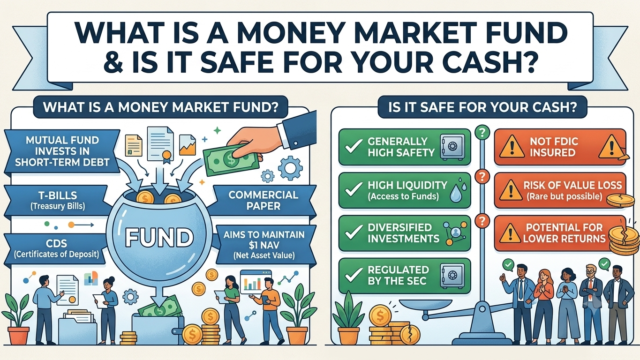
In the United States, the most effective place for your reserve is a High-Yield Savings Account (HYSA) or a Money Market Account (MMA) insured by the FDIC or NCUA. These accounts offer complete liquidity and competitive yields without capital risk. Short-term US Treasury bills or cash management accounts can also serve as secondary buckets for a portion of a larger fund.
In India, popular liquid options include high-interest savings accounts or liquid mutual funds. Liquid funds invest in short-term debt and money market instruments, offering relative stability and quick redemptions. Many investors also utilize short-term bank fixed deposits (FDs) with sweep-in facilities to maintain partial liquidity while securing fixed interest earnings.
Frequently asked questions
Should I invest my emergency fund in stocks or crypto? No. Investing this money in volatile assets exposes you to market risk, potentially forcing you to sell at a severe loss during a market downturn when you need cash most.
Should I pay off debt before building a cash safety net? It is generally best to build a small starter reserve first to handle immediate surprises, then focus aggressively on high-interest debt, and finally complete your full multi-month target.
When is it acceptable to tap into my emergency fund? You should only use these funds for unplanned, necessary, and urgent situations such as medical emergencies, sudden job loss, or critical repair costs required for work.
How often should I review my target total? Review your savings buffer annually or whenever a major life event occurs, such as a job change, marriage, birth of a child, or a significant change in monthly living expenses.
This article is for general education and is not investment, tax or financial advice. Rules and figures change — check the official source or a licensed adviser before acting.
Official information: https://www.investor.gov
This explainer is published by the MoneyPuran desk for general awareness. Rules, limits and rates change over time — please confirm with the official source. Corrections: corrections@moneypuran.com