 Money
Money
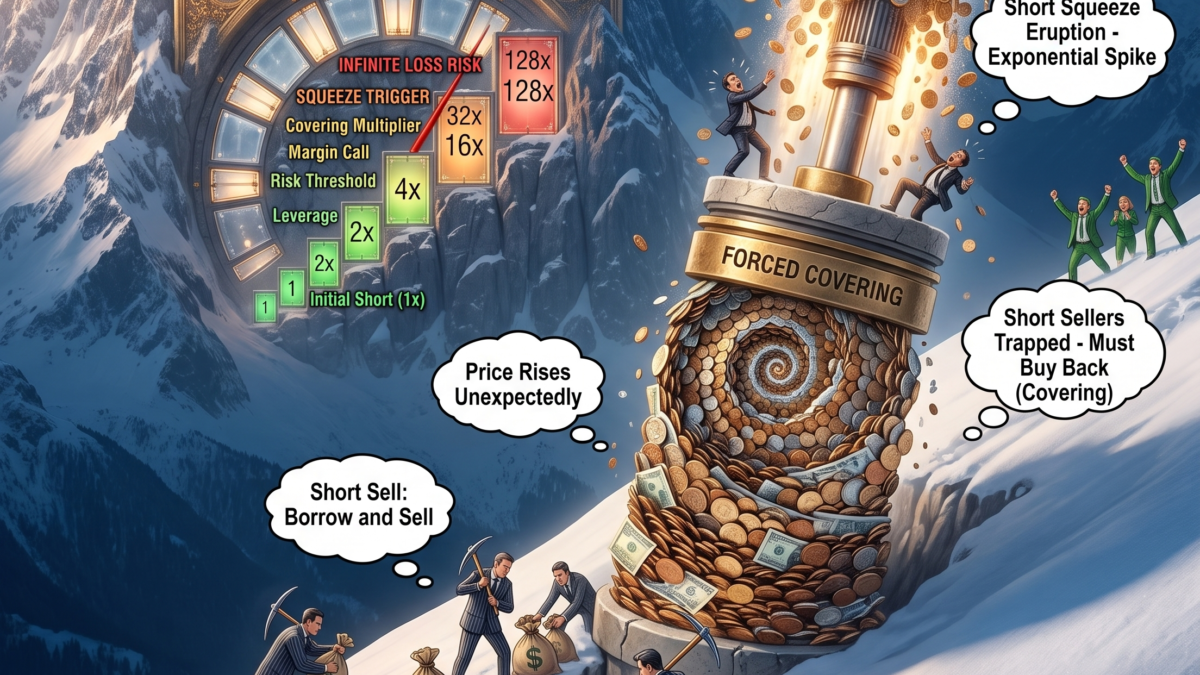
A comprehensive guide to borrowing shares, profiting from a falling market, and the explosive mechanics of a short squeeze.
Key points
- Short selling involves borrowing shares to sell them immediately, with the goal of buying them back later at a lower price.
- Unlike regular buying where losses are capped at your initial investment, shorting carries theoretically unlimited risk if the stock price rises.
- A short squeeze occurs when heavily shorted stocks rise rapidly, forcing panicked sellers to buy shares back and driving prices even higher.
- Global regulators such as the SEC and SEBI monitor short positions closely and can impose trading restrictions during volatile periods.
Understanding short selling is essential for anyone looking to comprehend advanced market mechanics, risk management, and overall stock volatility. While traditional investing focuses on buying low and selling high, shorting reverses this sequence by selling first and buying later. It is a specialized strategy used by institutional traders and experienced retail participants to profit from declining asset prices.
The mechanics of short selling
At its core, short selling is the practice of borrowing shares from a broker, immediately selling those borrowed shares on the open market, and hoping to repurchase them later at a lower price. If the stock price drops, you return the borrowed shares to your broker and keep the price difference as profit. However, if the stock price goes up, you must still replace the borrowed shares, meaning you will have to buy them at a higher price and take a loss.
To execute this trade safely and legally, market participants rely on specific infrastructure and must meet several core criteria:
- A margin account with a licensed brokerage that permits borrowing.
- Sufficient collateral or cash to cover margin requirements.
- Availability of the target stock in the broker’s securities lending pool.
- Willingness to pay borrowing fees and interest while the position remains open.
Step by step guide to short selling
While the actual trade execution happens with a click, the underlying process involves multiple moving parts that automated brokerages handle behind the scenes. Here is how the process works from start to finish:
- Locate and borrow shares of a target company through your broker’s platform.
- Sell the borrowed shares on the open stock exchange to receive cash proceeds.
- Monitor the position as market conditions evolve and the company’s valuation fluctuates.
- Buy back the shares on the open market to close out the obligation.
- Return the shares to the broker, finalizing either your profit or loss.
What is a short squeeze?
A short squeeze represents one of the most explosive and volatile phenomena in modern financial markets. When a stock is heavily shorted, a vast number of market participants are betting that its price will decline. If unexpected positive news or coordinated buying drives the price up instead, those short sellers face mounting financial pressure.
As the stock price climbs, brokers issue margin calls demanding more collateral. To prevent catastrophic losses, short sellers are forced to buy back shares on the open market. This sudden surge of compulsory buying drives the stock price even higher, trapping remaining shorts in a self-reinforcing upward spiral, famously demonstrated during historic events like the 2021 market squeeze.
US vs India regulations and market practices
While the fundamental economic concept remains identical across borders, the regulatory frameworks differ. In the United States, the SEC enforces rules like the ‘uptick rule’ to prevent abusive downward pressure. In India, SEBI mandates strict reporting and disclosure of short positions for institutional investors, and retail shorting is typically restricted to the intraday segment unless executed through designated lending and borrowing mechanisms.
Frequently asked questions
Are potential losses really unlimited when shorting? Yes, because a stock’s price can theoretically rise indefinitely, your potential financial loss has no upper ceiling.
Do I have to pay fees on borrowed shares? Yes, brokers charge a borrowing fee or interest rate, which varies based on how difficult the particular stock is to borrow.
Can regulators ban short selling? Yes, during times of severe market stress or financial crises, regulators have the authority to temporarily restrict or ban shorting on specific equities or entire markets.
This article is for general education and is not investment, tax or financial advice. Rules and figures change — check the official source or a licensed adviser before acting.
Official information: https://www.investor.gov
This explainer is published by the MoneyPuran desk for general awareness. Rules, limits and rates change over time — please confirm with the official source. Corrections: corrections@moneypuran.com