 Money
Money
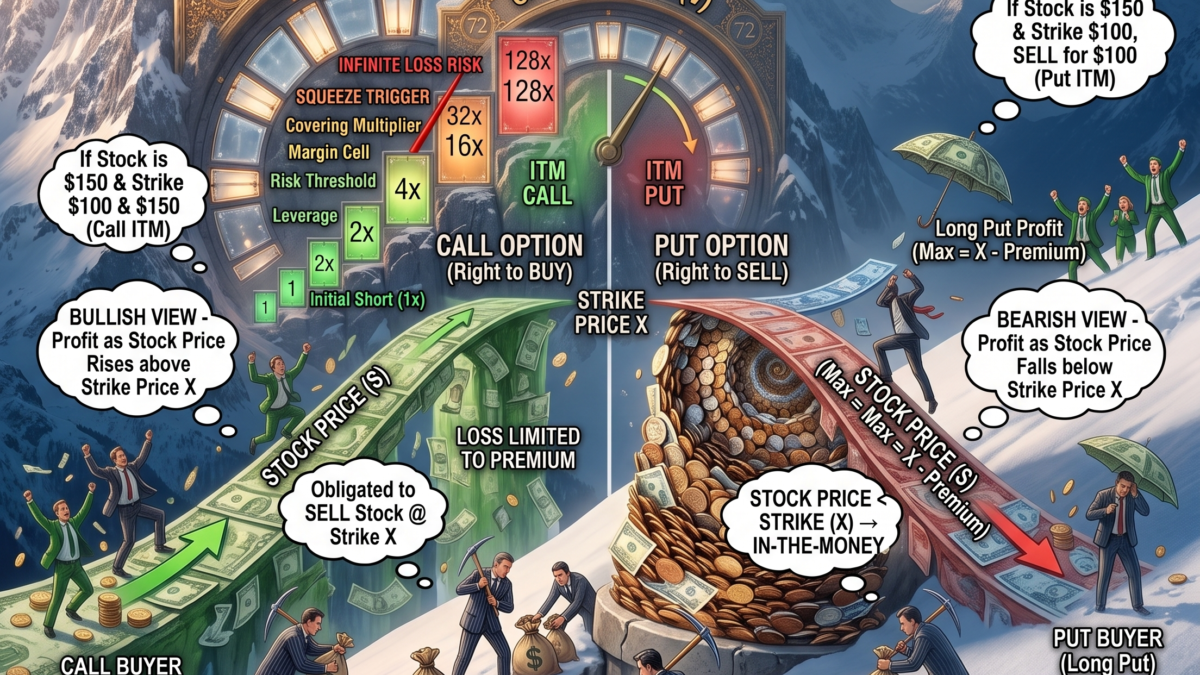
A clear, foundational breakdown of how call and put options work, detailing risks, profits, and the core differences between bullish and bearish contracts.
Key points
- A call option gives the right to buy an underlying asset at a set strike price before expiration.
- A put option gives the right to sell an underlying asset at a set strike price before expiration.
- Buying calls is a bullish strategy, while buying puts is typically bearish or used as a portfolio hedge.
- Options contracts lose value over time due to time decay if they remain out of the money.
Understanding a call vs put option is essential for any investor looking to expand beyond basic stock ownership. These derivative contracts give investors the right—though not the obligation—to buy or sell an underlying asset at a predetermined price within a specific timeframe. Whether you trade on Wall Street or through the National Stock Exchange of India, options provide flexible tools for speculation and risk management.
What is a Call Option?
A call option is a financial contract that gives the buyer the right to purchase a specific stock at a set strike price before the expiration date. Investors buy calls when they hold a bullish outlook, expecting the underlying stock price to rise significantly. To secure this right, the buyer pays an upfront fee known as a premium.
A call option profits when the underlying stock rises above the strike price plus the premium paid. If the stock stays below the strike price, the option expires worthless, and the investor loses only the premium. Selling a call, meanwhile, involves a neutral to bearish stance and carries substantial risk if the underlying stock surges.
What is a Put Option?
A put option is a contract that gives the buyer the right to sell a specific stock at a set strike price before expiration. Investors typically buy puts when they maintain a bearish outlook on a company or want to protect an existing stock portfolio against market downturns. Much like a call, acquiring this contract requires paying a premium to the seller.
A put option profits when the underlying asset falls below the strike price minus the premium. If the stock price remains high, the put expires worthless, limiting the buyer’s loss to the initial premium. Selling a put reflects a bullish or neutral outlook, obligating the seller to purchase the stock if the price drops.
Key Differences in Call vs Put Option Mechanics
To fully grasp the dynamics of a call vs put option, you must compare how they react to market movements and time decay. Both instruments feature unique risk profiles and expiration timelines that directly influence their market value.
- Directional Bias: Calls profit from rising prices (bullish), while puts profit from falling prices (bearish).
- Obligations: Buying either option limits risk to the premium, while selling options introduces higher risk or margin requirements.
- Time Decay: Both call and put options lose value rapidly as expiration approaches if they are out of the money.
US vs India Regulatory and Trading Frameworks
While the mathematical mechanics of options remain identical globally, the regulatory bodies and contract specifications differ by jurisdiction. In the United States, equity options are overseen by the SEC and traded on regulated exchanges like the Cboe. In India, options trading is regulated by the Securities and Exchange Board of India (SEBI) and executed through major platforms like the NSE and BSE, featuring strict lot sizes and weekly or monthly expiries.
Tax treatment on options gains also varies significantly. In the US, short-term options trading profits face standard income tax rates, whereas India classifies equity derivatives transactions primarily as speculative or non-speculative business income, subject to specific tax audit rules and securities transaction taxes. Always check current tax guidelines directly with the IRS or the Income Tax Department of India.
Frequently asked questions
What happens if my option expires out of the money? The option becomes completely worthless, and your contract simply expires. You lose the initial premium paid to purchase it, with no further obligations.
Can I sell my option before expiration date? Yes, most retail investors close their positions by selling the contract back into the open market before expiration rather than exercising it.
Why do options lose value over time? Time decay, measured by theta, erodes the extrinsic value of an option every single day as the opportunity for the stock to move diminishes.
This article is for general education and is not investment, tax or financial advice. Rules and figures change — check the official source or a licensed adviser before acting.
Official information: https://www.investor.gov
This explainer is published by the MoneyPuran desk for general awareness. Rules, limits and rates change over time — please confirm with the official source. Corrections: corrections@moneypuran.com