 Money
Money
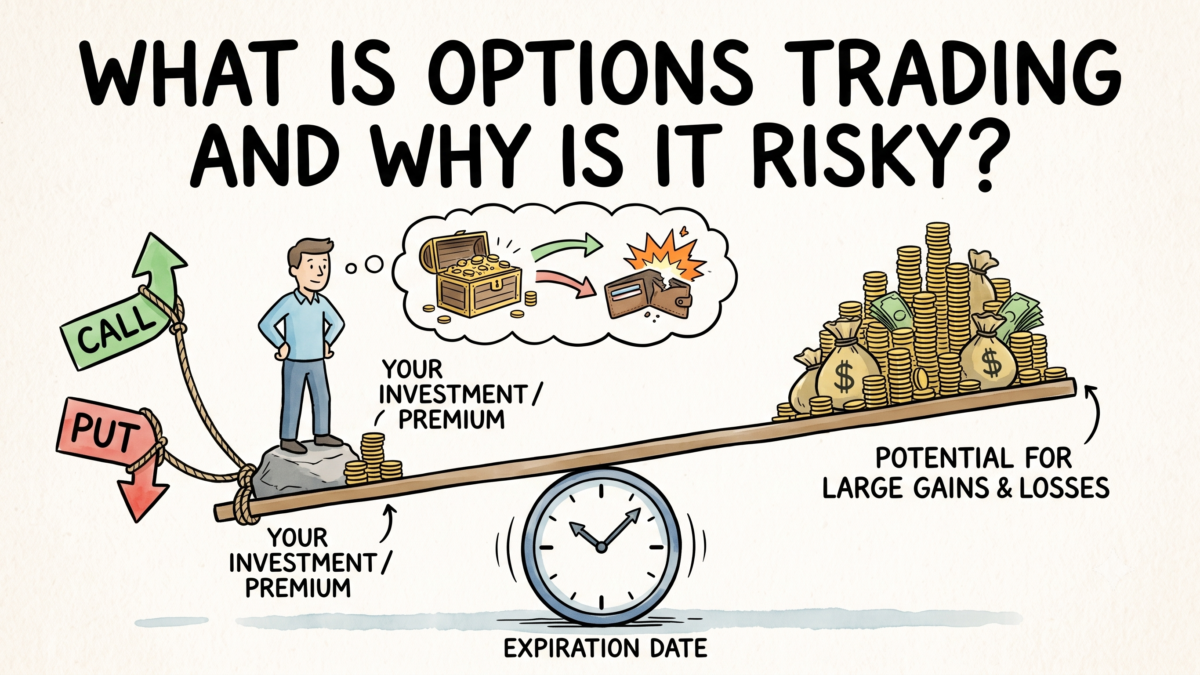
A clear, foundational breakdown of options contracts, how leverage works, and why most retail participants face significant financial risks.
The Mechanics of Options Contracts
Call Options: Betting on a Price Rise
-
The Setup: Imagine Stock X is currently trading at $50. You believe the price will increase next month.
-
The Trade: You execute an order to buy a call option with a strike price of $55. It expires in one month and costs a premium of $2 per share.
-
The Cost: Since standard stock option contracts control 100 shares, your total premium paid is $200. This $200 is your maximum potential loss.
-
The Result (Win): Stock X jumps to $65 before expiration. You exercise your right to buy the shares at your $55 strike price. You can immediately sell them at the $65 market price, netting a $10 profit per share. After subtracting your $2 premium, your total profit is $800.
-
The Result (Loss): Stock X stays at $50. The contract expires completely worthless, and you lose your initial $200 premium.
Put Options: Betting on a Price Fall
-
The Setup: Stock Y is trading at $100. You believe an upcoming earnings report will be poor, causing the price to drop.
-
The Trade: You buy a put option with a $90 strike price for a $3 premium. This costs you $300 total.
-
The Result (Win): Stock Y crashes to $70. You now have the right to sell the stock at $90, even though the open market price is only $70.
-
The Profit: This yields a $20 per share advantage. After subtracting your $3 premium, your total profit is $1,700.
-
The Result (Loss): Stock Y rises to $110. The option vanishes upon expiry since the market did not move favorably, resulting in a total loss of your $300 premium.
Why Options Carry Extreme Risk
Solutions and Risk Management Strategies
-
Limit Exposure to Buying: Because unhedged option sellers can face theoretically unlimited losses, retail traders should generally avoid selling naked options. If you stick to buying options, your maximum loss is strictly capped at the premium paid.
-
Trade with Expendable Capital: Acknowledge that upon executing the order, the entire premium is at risk. Never allocate a large percentage of your portfolio to a single options trade.
-
Manage the Clock: Do not wait until the absolute last day of expiration to exit a trade if it is moving against you. Because time decay erodes value daily, closing a losing trade early can salvage a portion of your premium.
-
Use Options for Hedging: Instead of pure speculation, utilize options as an insurance policy. For example, if you own 100 shares of a stock you want to hold long-term, buying a put option can protect your portfolio from a sudden, short-term market crash.
Frequently asked questions
Can I lose more money than I invest in options trading? If you buy options, your maximum loss is strictly limited to the premium paid. However, if you sell or write options without adequate collateral or hedging, your losses can vastly exceed your initial account balance.
What is implied volatility? Implied volatility reflects the market’s forecast of a likely movement in an asset’s price. Higher volatility increases option premiums, making contracts more expensive to purchase.
Do options pay dividends? No. Option holders do not own the underlying shares directly, so they are not entitled to regular corporate dividend payments.
This article is for general education and is not investment, tax or financial advice. Rules and figures change — check the official source or a licensed adviser before acting.
Official information: https://www.investor.gov
This explainer is published by the MoneyPuran desk for general awareness. Rules, limits and rates change over time — please confirm with the official source. Corrections: corrections@moneypuran.com