 Money
Money
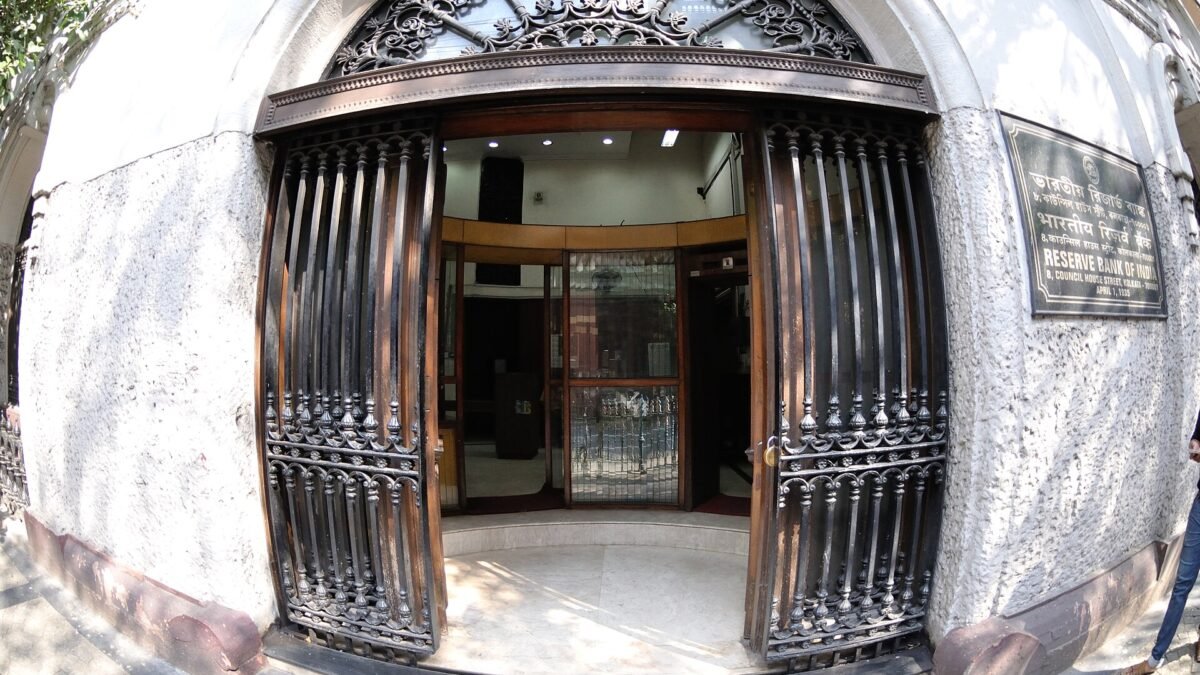
Reserve Bank of India data shows Q1 FY27 current account deficit at 0.5% of GDP as merchandise trade gap widens while net FPI outflows reach $9.6 billion.
Key points
- India’s current account deficit stood at $4.2 billion (0.5% of GDP) in Q1 2026-27, up from $3.4 billion (0.4% of GDP) in Q1 2025-26.
- Merchandise trade deficit expanded to $86.1 billion, driven by higher goods imports including petroleum, oil, and lubricants.
- Net services receipts rose to $51.6 billion, while private remittances increased to $42.9 billion.
- Net FDI recorded an inflow of $6.1 billion, whereas foreign portfolio investment (FPI) swung to a net outflow of $9.6 billion.
- Foreign exchange reserves depleted by $8.1 billion on a balance of payments basis during the April-June 2026 quarter.
The India current account deficit stood at $4.2 billion, or 0.5% of gross domestic product (GDP), in the first quarter of fiscal year 2026-27, according to preliminary balance of payments data released by the Reserve Bank of India on Tuesday. This marks a modest expansion from the $3.4 billion deficit, equivalent to 0.4% of GDP, recorded during the corresponding April-June quarter of 2025-26.
The Reserve Bank of India reported that while external trade in goods registered a wider deficit, strong growth in software and business services exports along with robust private remittances helped cushion the overall current account position. However, substantial net portfolio outflows weighed heavily on the financial account, leading to a drawdown in external reserve assets over the three-month period.
Merchandise trade gap expands India current account deficit
A primary factor driving the wider India current account deficit was the expansion of the country’s merchandise trade deficit. Data from the RBI showed that the trade gap in goods broadened to $86.1 billion during the April-June 2026 quarter, up from $68.9 billion in the same period a year earlier. Total merchandise exports rose to $132.0 billion from $112.7 billion, but goods imports grew at a faster pace, reaching $218.0 billion compared to $181.6 billion in Q1 2025-26.
Energy imports remained a significant driver of the import bill. The net trade deficit in petroleum, oil, and lubricants (POL) widened to $37.6 billion in Q1 2026-27 from $32.2 billion a year prior. POL exports totaled $23.0 billion against imports of $60.6 billion. In developing economies with high energy dependency, rising international oil prices or elevated domestic industrial demand often amplify merchandise trade deficits, directly exerting upward pressure on the current account balance.
Despite the widening goods gap, domestic manufacturing demand and raw material requirements reflect ongoing economic activity across key industrial sectors. Policymakers and market analysts monitor merchandise trade figures closely to evaluate trade competitiveness and foreign currency demand from commercial importers.
Services exports and remittances buffer India current account deficit
Offsetting the merchandise trade shortfall, net services receipts grew steadily during the quarter, helping to contain the broader India current account deficit. Net services income rose to $51.6 billion in Q1 2026-27, up from $47.9 billion in the corresponding quarter of the previous year. Total services exports expanded to $106.2 billion from $97.4 billion, while services imports rose to $54.6 billion from $49.5 billion.
The RBI noted that services exports increased across several major categories, including computer services, transportation services, and other specialized business services. India’s technology sector and global capability centers (GCCs) continue to generate consistent service revenues from international clients, providing vital foreign exchange earnings for the national economy.
Secondary income also provided significant support to the external balance. Personal transfer receipts, which largely comprise remittances from non-resident Indians working overseas, surged to $42.9 billion in Q1 2026-27, up substantially from $33.2 billion in Q1 2025-26. Total net secondary income reached $40.8 billion. Meanwhile, net outgo on the primary income account—reflecting investment income payments such as dividends and interest—contracted to $10.5 billion from $13.3 billion a year earlier.
Economists view these invisible earnings—comprising net services and private transfers—as structural pillars of India’s external accounts. High remittance inflows and resilient service exports consistently provide a reliable hedge against volatile merchandise trade balances, preventing sharper deteriorations in the current account.
Capital flows and reserve depletion trends
The financial account presented a mixed picture during the first quarter of fiscal 2026-27. Foreign direct investment (FDI) demonstrated resilience, recording a net inflow of $6.1 billion compared to $5.2 billion in Q1 2025-26. Gross FDI inflows stood at $29.7 billion against outbound direct investments of $23.6 billion, signaling continued foreign long-term investor commitment to India’s domestic growth narrative.
Conversely, foreign portfolio investment (FPI) recorded a sharp reversal. Net FPI flows registered an outflow of $9.6 billion during the quarter, compared to a net inflow of $1.6 billion in the prior-year period. Total portfolio receipts reached $134.4 billion against outflows of $144.0 billion, reflecting global market volatility, shifting interest rate expectations, and realignments by international institutional investors.
Among other financial flows, non-resident Indian (NRI) deposits recorded net inflows of $2.8 billion, down from $3.6 billion recorded a year ago. External commercial borrowings (ECBs) by Indian corporates generated net inflows of $3.3 billion, compared with $4.4 billion in Q1 2025-26.
Due to the combination of portfolio outflows and a wider trade gap, India’s foreign exchange reserves depleted by $8.1 billion on a balance of payments basis during the April-June 2026 quarter. This contrasts with an accretion of $4.5 billion registered in the first quarter of the previous fiscal year.
Macroeconomic implications for currency and financial markets
The quarterly balance of payments publication provides essential insight into the overall health of an economy’s international financial transactions. For macro investors and currency traders, tracking the India current account deficit offers key signals regarding fundamental support for the Indian Rupee. When capital account inflows, such as FDI and FPI, fall short of funding the current account gap, central bank reserve drawdowns or exchange rate adjustments typically bridge the shortfall.
Central bank reserve buffers play a critical role in maintaining foreign exchange stability. While reserve drawdowns help absorb short-term external shocks, central banks carefully manage liquidity to prevent excessive currency volatility. Market participants will continue to monitor global crude oil prices, US dollar strength, and foreign investor asset allocations to gauge the future trajectory of the India current account deficit for remaining quarters of fiscal 2026-27.
Key numbers from RBI Q1 2026-27 BoP report
- Current Account Deficit: Stood at $4.2 billion (0.5% of GDP) vs $3.4 billion (0.4% of GDP) in Q1 2025-26.
- Merchandise Trade Gap: Widened to $86.1 billion (exports $132.0B, imports $218.0B) from $68.9 billion.
- Net Services Receipts: Climbed to $51.6 billion from $47.9 billion year-on-year.
- Private Remittances: Personal transfers rose significantly to $42.9 billion from $33.2 billion.
- Foreign Investment Flows: Net FDI rose to $6.1 billion, while net FPI swung to an outflow of $9.6 billion.
- Foreign Exchange Reserves: Depleted by $8.1 billion on a BoP basis, compared to an accretion of $4.5 billion in Q1 2025-26.
Frequently asked questions
What is the main cause of the widening India current account deficit? The widening of the India current account deficit to $4.2 billion in Q1 2026-27 was primarily driven by a higher merchandise trade deficit of $86.1 billion, caused by increased import volumes and higher petroleum trade gaps.
How did foreign portfolio investment affect India’s balance of payments in Q1 2026-27? Foreign portfolio investment experienced net outflows of $9.6 billion during the quarter, down from net inflows of $1.6 billion a year earlier, contributing to an $8.1 billion depletion in foreign exchange reserves.
What role do remittances play in supporting India’s external balance? Remittances from Indians overseas rose to $42.9 billion in Q1 2026-27, providing strong secondary income inflows that significantly narrowed the net trade deficit and bolstered the overall balance of payments.
This article is for information only and is not investment advice. Do your own research or consult a licensed adviser before investing.
Based on information published by Reserve Bank of India (RBI). Source: Reserve Bank of India (RBI). Spotted an error? corrections@moneypuran.com